Custom‑Fabricated Brass CNC Components: Materials, Process Tuning and Practical Project Handbook
Why Brass Stands Out for CNC Custom Fabrication
Every alloy variant brings a unique set of physical traits that shape how it behaves during subtractive machining. Brass does not just cut easily — it balances manufacturability with functional performance that few competing metals can match.
1. Optimized Cutting Behaviour
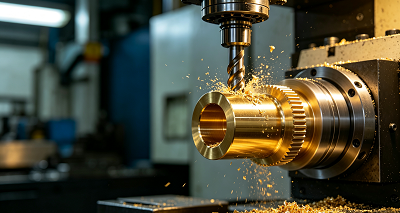
Lead‑containing brass grades feature microscopic lead inclusions that act as built‑in chip breakers and internal solid lubricants during cutting operations. This allows high feed rates, generates short, manageable chips and lowers tool friction. Not all brass performs equally here: ductile low‑lead grades may produce long string‑like chips that risk tool entanglement if toolpaths are not adjusted accordingly.
2. Good Corrosion & Environmental Stability
Brass resists oxidation and moderate liquid exposure well, making it suitable for plumbing fittings and outdoor hardware. Its corrosion performance heavily depends on alloying elements: tin‑enriched naval brass withstands salt‑laden marine conditions, while some brass grades are vulnerable to dezincification under continuous hot‑water exposure.
3. Balanced Ductility and Structural Rigidity
Thanks to its copper base, brass combines malleability and decent tensile strength. It can be shaped into intricate geometries without brittle fracture, yet holds dimensional stability for threaded assemblies, bushing and connector applications. Different temper states further tune flexibility for forming or rigidity for load‑bearing parts.
4. Inherent Visual Quality
Brass delivers a warm golden metallic finish straight off the machine. Uncoated parts can go directly into service for decorative hardware, while polishing, plating or protective coatings unlock premium cosmetic outcomes for consumer‑facing assemblies.
Selecting Brass Alloys: Match Grades Against Project Requirements
There exists no universal “best brass” for every CNC job. Material selection should weigh manufacturability against mechanical demands, environmental exposure, conductivity needs, cosmetic standards and regulatory compliance. Below is a practical overview of frequently‑specified brass alloys for custom CNC work.
| Alloy Grade | Key Machining Traits | Ideal Application Scenarios | Critical Considerations |
|---|---|---|---|
| C36000 (Free‑Cutting Brass) | Industry benchmark for machinability; clean chip fracture | Threaded fittings, fasteners, valve stems, electrical connectors | Contains lead; unsuitable for medical or lead‑restricted end‑uses |
| C26000 (Cartridge Brass) | Outstanding ductility and cold‑forming capacity | Terminals, battery contacts, decorative formed components | Produces stringy chips; requires modified tooling vs C36000 |
| C22000 (Commercial Bronze) | High copper content, good corrosion resistance | Architectural trim, weather‑exposed decorative hardware | Moderate cutting speed; annealing may be needed post‑forming |
| C23000 (Red Brass) | Dezincification resistance, medium mechanical strength | Plumbing manifolds, fluid handling components | Performance varies with water chemistry in long‑term service |
| C46400 (Naval Brass) | High strength + marine‑grade corrosion resistance | Seawater‑exposed marine hardware, high‑load fittings | Lower machinability; longer cycle times than free‑cutting brass |
C36000 Free‑Machining Brass
Widely adopted for high‑volume turning projects. Approximately 3% lead content promotes chip fragmentation, supporting aggressive feed rates and extending tool service life. Its tensile strength suits general‑purpose fittings and joint hardware. However, its lead content disqualifies it from projects governed by RoHS, drinking‑water safety or medical standards, and it shows poor chemical stability in acidic operating environments.
C23000 Red Brass
Also called Nordic brass. It excels at resisting dezincification degradation under water contact. Manufacturers deploy this alloy for pipe‑related hardware, rotor bars and fluid control parts. Note that it may still corrode under extreme chemical or high‑temperature operating environments.
C22000 Commercial Bronze
Despite its bronze‑style naming, this is a high‑copper brass alloy. It delivers solid corrosion performance and balanced ductility. Architects frequently specify C22000 for exterior weatherstripping and ornamental components. Parts subjected to harsh service conditions sometimes require post‑process annealing to relieve internal residual stress.
Important note: When regulatory rules forbid lead content, engineers must switch to dedicated lead‑free brass grades. These substitute lead with silicon or bismuth for chip‑breaking performance, but often demand adjusted feeds/speeds and see elevated tool wear compared with traditional C36000.
CNC Milling & Turning Workflow: Practical Process Tuning for Brass Parts
Most custom brass components rely on turning, milling, or combined turn‑mill processing. Turning is the go‑to process for rotation‑symmetric workpieces: shafts, bushings, nuts, threaded fittings. Milling produces pockets, slots, flat faces, contoured profiles and hole arrays. For components mixing rotational geometry and milled cutouts, 4‑axis, 5‑axis or turn‑mill equipment cuts down repeated re‑fixturing, lowering cumulative positioning error and improving production consistency.
Tooling, Spindle Speed and Feed Rate Guidelines
Brass cutting parameters cannot simply copy settings developed for aluminium or steel. Alloy grade, cutter diameter, flute quantity, tool material, machine rigidity, cutting depth and part wall thickness all shape optimal values.
Core practical rules:
- Always deploy razor‑sharp cutting edges. Dull tools rub rather than shear brass material, triggering excess heat, dimensional drift, poor surface finish and heavy burr build‑up.
- Start parameter setup from tool‑maker reference charts, validate performance with trial cuts before full‑batch production. Target stable chip formation, reliable chip evacuation and controlled heat generation.
- Thin‑wall and miniature‑feature parts benefit from reduced radial engagement and enhanced workpiece support; excessive speed will induce workpiece vibration and part distortion.
- For many brass applications, compressed‑air chip blowing or minimal quantity lubrication (MQL) suffices; flood coolant is reserved for heavy stock‑removal roughing passes.
Mitigating Burr Formation in Brass Machining
Burrs commonly emerge at hole exit edges, thin‑wall boundaries and sharp internal corners, where the tool pushes material rather than shearing it cleanly. You can reduce burr occurrence via a combination of process controls:
- Maintain sharp tooling and rigid workpiece clamping.
- Adjust tool exit trajectories, feed magnitudes and cutting directions.
- Integrate pre‑defined edge chamfers or small radii into CAD drawings to break sharp edges.
For burrs that still remain post‑cutting, select post‑processing aligned to tolerance and cosmetic needs: rotary brushing, tumbling/vibratory finishing, or targeted manual deburring operations.
DFM for Brass: Design Optimizations to Lower Cost & Scrap
Design‑for‑Manufacturability review before drawing release drastically reduces set‑up time, scrap loss and overall part pricing. Go through this checklist before sending RFQ documentation:
- Guarantee unobstructed tool access for deep cavities, narrow slots and internal corner features.
- Avoid unreasonably thin wall sections; plan adequate clamping support for fragile geometry.
- Standardize drill diameters, thread specifications and internal radii wherever feasible.
- Restrict tight dimensional tolerances exclusively to functionally critical surfaces; clearly define datum references.
- Document cosmetic surfaces, acceptable burr thresholds, edge break requirements and surface roughness targets.
- Discuss deep cross‑drilled holes and hard‑to‑clean internal threads with your manufacturer early, as these bring chip‑evacuation challenges.
Tolerance Performance & Quality Verification
Achievable brass CNC tolerance ranges are not fixed numbers. They vary with feature dimension, part geometry, machine condition, tool degradation, thermal expansion, fixturing stability and inspection methodology. Demanding tight tolerances often require extra finishing passes, temperature‑controlled shop environments, custom fixtures and extended inspection cycles.
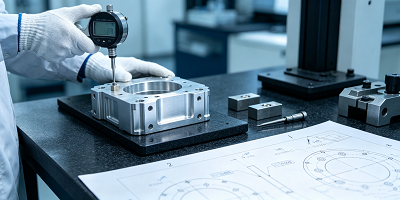
For high‑spec or regulated custom brass components, request formal inspection documentation from your supplier. Typical deliverables include CMM measurement logs, first‑article inspection (FAI), thread‑gauge verification, surface roughness test reports, visual assessment records, conformance certificates and raw‑material batch traceability paperwork. Clearly write down all inspection requirements within your RFQ package prior to production kick‑off.
Post‑Processing and Surface Finish Choices for CNC‑Machined Brass
Brass possesses no native protective passivation layer, but its natural golden appearance allows parts to ship “as‑machined” for purely functional assemblies. Where visual quality or extra environmental protection is required, multiple finishing routes are available:
- As‑Machined Direct output from CNC equipment. Best suited for non‑cosmetic functional hardware. Note that unprotected brass will gradually tarnish with time and environmental exposure.
- Buffing & Mechanical Polishing Abrasive wheel polishing removes tool marks and surface imperfections, yielding smooth, lustrous brass surfaces for decorative hardware and consumer products.
- Electroplating Electrochemical deposition bonds alternative metal layers onto brass substrates. Plating can deliver glossy, wear‑resistant surfaces and alter the base colour of brass parts.
- Honing Abrasive stone finishing generates fine cross‑hatch texture on inner bore surfaces, widely used for brass bushing components needing optimized tribological performance.
- Powder Coating Dry powder coating creates robust outer barriers, improving both wear performance and corrosion resistance for brass parts operating under harsh conditions.
Lead‑Free Brass and RoHS Compliance
Products sold into global regulated markets frequently demand lead‑free brass complying with RoHS directives. Specifying lead‑free brass is not just a simple material swap: alternative alloys behave differently during machining. Cycle times can extend, tool wear accelerates, and chip characteristics shift relative to conventional C36000.
When submitting RFQs for compliant parts, explicitly request certified alloy material certificates, supplier declarations of conformity and batch traceability records. Experienced manufacturers will review toolpath strategies, cycle‑time expectations and surface quality targets before quoting lead‑free brass projects.
Industry Applications for Custom CNC Brass Components
Thanks to its blended set of electrical, mechanical and corrosion‑resistant properties, CNC‑fabricated brass parts populate diverse market sectors:
- Electronics & Electrical Hardware: Conductive connectors, contact terminals, sensor housings, conductive pin assemblies.
- Fluid Control Systems: Valves, pipe adapters, nozzles, manifolds and plumbing fittings.
- Mechanical Assemblies: Low‑friction bushings, gear segments, hinge components, precision fasteners and shaft parts.
- Consumer & Ornamental Goods: Control knobs, door hardware, lighting fixtures, architectural trim and decorative accessories.
Always match alloy grade, tolerance band and surface finish to real‑world service conditions. A decorative indoor knob, high‑cycle service valve and electrical contact may all be brass parts — yet they seldom share identical material, tolerance or finishing requirements.
Cost Drivers & Production Planning for Custom Brass CNC Work
Raw brass material cost is only one fraction of final component pricing. Your total quote will be shaped by alloy grade, stock weight, part geometric complexity, total machining runtime, number of set‑ups, custom fixture requirements, tolerance tightness, order batch volume, post‑processing steps, inspection scope, packaging and delivery timeline。
Project planning differs across production phases:
- Prototype stage: Emphasize design validation, DFM feedback and fast iteration speed over unit‑price optimization.
- Low‑volume manufacturing: Balance programming and fixture fixed costs against total piece count.
- Mass‑scale production: Reduce per‑unit cost by leveraging standardized tooling, optimized fixturing and stable, repeatable inspection workflows.
To obtain precise, reliable quotations, your RFQ submission should include 2D engineering drawings, 3D CAD files, specified brass material grade, quantity requirements, finish specs, tolerance rules, inspection expectations and target lead time.
Tips for Selecting a Reliable Brass CNC Machining Partner
Evaluate technical competence before comparing piece‑part prices. A competent brass manufacturing vendor can advise alloy selection, flag DFM risks, explain realistic tolerance boundaries, quote both prototype and volume batches, and coordinate secondary finishing and quality validation.
When assessing potential suppliers, investigate:
- Capacity for brass‑optimized turning, milling and multi‑axis processing; machine size envelope.
- Raw‑material traceability, availability of lead‑free brass grades and RoHS compliance documentation.
- In‑house metrology resources including CMM equipment for dimensional verification.
- Surface‑finishing process control, quality management certifications, communication responsiveness and past delivery performance.
Suppliers who deliver transparent answers and documented inspection outputs simplify long‑term repeat‑order collaboration.
Closing Thoughts
Brass CNC machining delivers high‑value precision custom parts that merge manufacturability, electrical conductivity, corrosion resistance, low‑friction mechanical performance and attractive visual characteristics. Successful brass projects hinge on four pillars: picking the right alloy for your operating conditions, applying DFM principles at design phase, carefully tuning cutting processes to control burrs and surface finish, and partnering with a manufacturer capable of delivering consistent quality plus required compliance documentation.
Frequently Asked Questions
Is brass easier to machine than aluminium?
Many brass grades exhibit excellent chip‑breaking machinability. Whether brass machines more easily than aluminium depends on specific alloy, part geometry, cutting tool selection, surface‑finish requirements and production targets. Ductile low‑lead brass may produce troublesome stringy chips, while some aluminium alloys offer very high‑speed cutting capability.
Which brass alloy is the primary choice for CNC custom work?
C36000 free‑cutting brass is the baseline choice for high‑speed turning thanks to its outstanding chip control. Where ductility, forming, corrosion resistance or regulatory compliance take priority, C26000, C22000, C23000, naval brass or lead‑free brass alternatives become better options.
What factors determine brass CNC part pricing?
Total cost is driven by material specification, part complexity, machining runtime, fixture set‑ups, order quantity, tolerance requirements, secondary finishing, inspection scope and delivery deadlines. Accurate quotations rely on complete drawing data and quantity forecasts.
What tolerance levels can brass CNC machining achieve?
Realistic tolerances are conditional on feature geometry, machine capability, tool wear, thermal stability and fixturing. Avoid specifying universal blanket tolerances for all features. Critical dimensions should be reviewed in the DFM phase with your manufacturing partner.
What practical approaches remove burrs from CNC‑machined brass?
Start with sharp cutting tools, rigid fixturing, optimized feeds and tool trajectories. Add drawing features like chamfers or edge radii. Post‑process options include brushing, vibratory tumbling or targeted manual deburring matched to part tolerance and cosmetic demands.
Is C36000 always superior to C26000 for CNC jobs?
C36000 outperforms on high‑speed turning and chip control. C26000 is preferable when ductility, cold‑forming capability, visual aesthetics or regulatory compliance requirements carry higher priority than maximum machining throughput.