Precipitation Hardening: Metallurgy Fundamentals, Workflow, Trade‑offs and Real‑World Applications
What Exactly Is Precipitation Hardening?
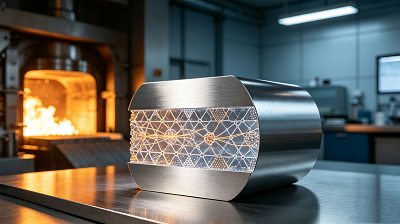
Precipitation hardening is a volume‑strengthening heat‑treatment technique exclusive to specific alloy grades. Its core mechanism relies on generating abundant nanoscale secondary‑phase particles (precipitates) scattered throughout the base‑metal crystal lattice. These tiny precipitates create local lattice distortion and act as physical barriers for dislocation motion. Since dislocation movement directly triggers plastic deformation in metals, blocking dislocations raises yield strength, tensile strength and hardness significantly.
Unlike surface‑only hardening methods such as carburizing or nitriding, precipitation hardening modifies material properties across the entire cross‑section of a part, rather than only the outer surface. That makes it highly valuable for load‑bearing structural parts where consistent bulk‑material performance is required. Many high‑end engineering components rely on this technology to hit demanding mechanical targets without switching to far‑more expensive raw material options.
How Precipitation Hardening Operates: Step‑by‑Step Workflow
The whole process falls into four logical phases: pre‑processing preparation, solution heat treatment, quenching, and controlled aging. Every phase demands strict temperature‑and‑time regulation; minor deviations will degrade final component performance.
1. Pre‑Process Preparation
Before thermal cycles start, both workpieces and heating equipment need proper setup. Parts with intricate geometries, heavy wall‑section variation or bulky dimensions bring major risks: uneven heat distribution inside the workpiece produces inconsistent microstructures after treatment. Designers often simplify part geometry wherever feasible before heat‑treatment. When finished complex components must be processed, specialized fixtures are adopted to improve temperature uniformity across all surfaces.
Furnace readiness is equally critical. Operators pre‑heat furnaces, calibrate thermocouples and clean chambers to eliminate surface contaminants. Stable, homogeneous furnace temperature lays the groundwork for repeatable heat‑treatment outcomes.
2. Solution Heat Treatment
In this core heating stage, alloys are heated to a precise temperature between the solvus temperature and solidus (melting‑onset) point, and held for sufficient soak time. Under these thermal conditions, alloying elements fully dissolve into the base‑metal matrix and form a uniform single‑phase solid solution.
Room‑temperature conditions prevent atomic diffusion, so alloying components cannot redistribute naturally. Elevated furnace temperatures activate atomic mobility to achieve even dispersion of solute atoms across the whole material volume. This homogeneous solid‑solution state is the essential prerequisite for subsequent precipitate formation.
3. Quenching to Create Supersaturated Solid Solution
Once solution treatment completes, parts go through rapid quenching. Operators immerse hot workpieces into cooling media such as water, oil or polymer blends to bring the temperature down to ambient level quickly.
The fast cooling rate “freezes” solute atoms inside the matrix, trapping them far beyond their normal room‑temperature solubility limit. This creates a metastable supersaturated solid solution. At this quenched state, the alloy features high ductility, yet possesses none of the target high‑strength properties. If cooling proceeds too slowly, solute atoms will separate out prematurely, ruining later aging performance.
4. Aging (Precipitation Formation)
Aging is the step that actually delivers strengthening effects. The quenched supersaturated alloy is reheated to a moderate temperature range and is isothermally held for multiple hours. Aging temperature varies heavily by alloy system: aluminum alloys typically age around 150‑180 °C, while nickel‑based superalloys require considerably higher aging temperatures.
Trapped solute atoms slowly diffuse and cluster, developing densely‑distributed nano‑sized precipitate particles. These precipitates obstruct dislocation glide, raising hardness and strength. Engineers closely monitor aging temperature and holding duration. Reaching peak aging delivers optimal mechanical properties. Once the target microstructure is achieved, components cool gradually back to room temperature for downstream use.
Critical note: Excessively high aging temperature or overly long holding time triggers over‑aging: precipitates grow coarse, the barrier effect weakens, and strength and hardness drop sharply.
Common Alloys Suitable for Precipitation Hardening
This thermal treatment works only for alloys whose alloy‑element solubility drops noticeably as temperature decreases. The most widely applied material groups are listed below:
- Aluminum alloys: 2024, 6061, 7075 are classic age‑hardenable grades. 6061‑T6 is extremely common across aerospace and general‑structure manufacturing.
- Precipitation‑hardening stainless steels: 17‑4 PH and 15‑5 PH combine high strength and decent corrosion resistance, ideal for precision mechanical parts.
- Titanium & magnesium alloys: Used in lightweight high‑strength structural assemblies for aerospace sectors.
- Nickel‑based superalloys: Inconel 718, Waspaloy, René 41 rely on precipitation hardening to sustain high‑temperature mechanical performance for gas‑turbine engine hardware.
Not all alloys support age hardening. Materials without temperature‑dependent solute solubility cannot form effective strengthening precipitates, so other strengthening routes (grain refinement, work hardening) must be selected instead.
Core Advantages of Precipitation Hardening
- Remarkable boost in yield and tensile strength Controlled precipitation delivers large‑magnitude strength improvements. For 6061 aluminum, T6 aging raises yield strength from roughly 124 MPa up to 276 MPa, while ultimate tensile strength climbs to 310 MPa, making lightweight aluminum viable for heavily‑loaded structures.
- Balanced toughness alongside hardness Well‑executed precipitation hardening refines microstructures and relieves partial internal stresses. Treated alloys resist impact loads and stress‑induced fracture, securing structural integrity under cyclic service conditions. Unlike martensitic quenching, it rarely produces extreme brittleness.
- Improved dimensional stability Parts resist plastic and thermal deformation better after processing. During CNC machining, polishing and other high‑stress post‑processing operations, components retain dimensional accuracy, which is highly valuable for tight‑tolerance precision hardware.
- Cost‑efficient material selection strategy Instead of purchasing expensive high‑performance base metals, engineers can adopt relatively affordable base alloys and achieve target mechanical performance via precipitation hardening heat treatment. This cuts overall material procurement expenses for mass‑production projects.
- Full‑volume uniform property enhancement Strengthening spreads through the whole part cross‑section, avoiding the property gradient seen on surface‑hardened components.
Key Process‑Related Challenges & Practical Guidance
Even with mature workflows, fabricators face recurring technical hurdles. Understanding these risks helps engineers set realistic specifications for parts.
Main Challenges
- Non‑uniform precipitate distribution Large‑size or complex‑geometry parts suffer uneven furnace heating or inconsistent quenching rates. Some regions form fine precipitates while others generate coarse particles, leading to scattered mechanical‑property values across a single workpiece.
- Over‑aging risk Excessive aging temperature or extended dwell time makes precipitates coarsen. The strengthening effect fades, and component strength drops irreversibly.
- Residual stress and distortion risk Sharp temperature swings during quenching plus thermal expansion in aging introduce residual internal stresses. Severe cases trigger dimensional warping or micro‑cracks, especially for thin‑wall and intricate‑profile components.
Practical Operational Tips
- Optimize all heat‑treatment parameters holistically Solution temperature, quenching‑medium selection, cooling speed, aging temperature and hold‑time jointly decide final quality. Poor quenching media slows cooling rates and brings premature coarse‑precipitate formation. Process parameters should be fine‑tuned for each specific alloy grade and part thickness.
- Strict temperature control Small temperature deviations can shift outcomes. For example, standard solution temperature for 6061 aluminum sits at 529 °C with aging at 160 °C; production must stay tightly around these target set‑points. Furnace calibration is a regular maintenance requirement.
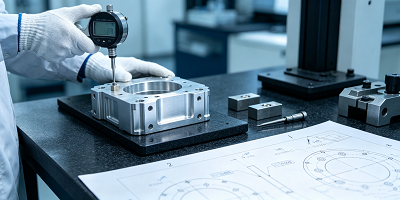
- Implement in‑process quality verification Hardness testing serves as fast‑feedback process inspection. Non‑destructive testing can detect hidden cracks and internal defects. Periodic metallographic section analysis checks precipitate morphology and distribution for process validation.
Precipitation Hardening vs. Annealing vs. Direct Quenching
People frequently confuse these three heat‑treatment workflows, as all rely on controlled heating‑and‑cooling cycles. Their core purposes and procedures differ substantially.
Precipitation Hardening vs. Annealing
Annealing is primarily a stress‑relief procedure designed to boost ductility and machinability. Both processes heat alloys near recrystallization temperatures. After heating finishes:
- Precipitation hardening applies rapid quenching, followed by aging for strength improvement.
- Annealing lets parts cool down slowly under ambient‑air or furnace‑cool conditions, to soften material and eliminate residual stresses.
Precipitation Hardening vs. Stand‑Alone Quenching
Quenching itself is just one sub‑step within precipitation hardening. Pure quenching heats material then rapidly cools it to form hard, brittle martensitic microstructures in ferrous alloys. It does not include subsequent aging cycles for controlled precipitate generation.
Precipitation hardening follows the full sequence: solution treatment → quenching → aging. It achieves strengthening via second‑phase precipitates rather than martensite phase transformation. It also generally creates less component distortion than conventional quench‑hardening for steels.
Industrial Application Scenarios
Thanks to its unique combination of high strength, good toughness and dimensional stability, precipitation‑hardened alloys find broad deployment across high‑demand sectors:
- Aerospace: Landing‑gear sub‑components, airframe fasteners, engine‑section hardware. 6061‑T6 aluminum is widely used in aerospace structural assemblies.
- Automotive: High‑load engine components, suspension parts and chassis structures requiring durability under cyclic mechanical loads.
- Medical devices: Surgical instruments and biocompatible implants, where hardness, wear resistance and stable mechanical behavior are mandatory.
- Tooling & machinery: Molds, jigs and cutting‑tool substrates. Precipitation‑hardened tooling extends service life for high‑volume production runs.
- Defense & energy: Nickel‑base superalloy parts for high‑temperature gas‑turbine and power‑generation equipment.
Closing Thoughts
Precipitation hardening remains an irreplaceable metallurgical tool for modern manufacturing. By precisely tuning nanoscale precipitate structures inside alloy matrices, engineers can obtain high‑strength, dimensionally stable components without relying on prohibitively costly raw materials. Nevertheless, success hinges on strict process parameter management: temperature, holding duration, quenching performance and part geometry all interact to shape final results. When designing new parts, material engineers should evaluate whether age‑hardenable alloys paired with precipitation hardening represent the optimal solution for project‑specific mechanical‑property targets.
FAQ
Q1: How do aging temperature and hold‑time alter alloy performance?
Higher temperatures or longer dwell‑times accelerate precipitate growth. While strength rises during early aging, over‑aging will coarsen particles and reduce overall mechanical performance. Every alloy has its own peak‑aging window.
Q2: Why are complex‑shaped parts harder to age‑harden uniformly?
Variable wall thickness leads to inconsistent heating and cooling rates. Local thermal gradients create uneven precipitate sizes. Using heat‑treatment fixtures and controlled‑rate quenching can mitigate this limitation.
Q3: What influence does quenching medium exert?
Water, oil and polymer solutions deliver different cooling velocities. Faster cooling better preserves supersaturated solid solution, yet may amplify residual stress and distortion risk. Slower cooling lowers distortion risk but risks premature precipitation. Material grade and part geometry govern quenching‑medium selection.