Vacuum (Urethane) Casting: Soft‑Tooling Solution for Prototypes & Low‑Volume Runs
What Exactly Is Vacuum / Urethane Casting?
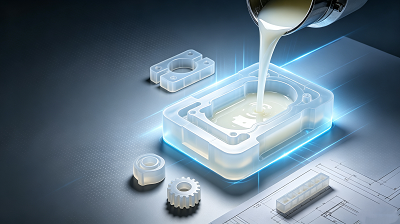
Vacuum casting relies on flexible silicone tooling and two‑part polyurethane resin. Under controlled vacuum conditions, mixed liquid resin fills the hollow cavity inside a split silicone mold, then chemically cures to replicate every feature of the original master pattern.
The vacuum chamber is the heart of this technology. By pulling air out throughout mixing and pouring phases, it eliminates trapped micro‑bubbles, voids and flow‑related defects. The finished parts achieve smooth surfaces and sharp feature reproduction comparable to injection‑molded outputs.
This process targets low‑to‑medium batch sizes, generally from 10 up to 50 pieces per mold. It is not meant for mass‑scale manufacturing. Instead, it fills the gap between one‑off 3D‑printed prototypes and high‑volume injection molding production. It handles both rigid housings and soft elastomeric parts, making it popular across product development cycles. One important caveat: vacuum casting is not suitable for components built from heat‑sensitive or metal raw materials.
Step‑by‑Step Vacuum Casting Workflow
Every vacuum‑cast component originates from a high‑quality master pattern; defects on this master will transfer directly onto every replicated part.
- Fabricate the master pattern The master is normally generated via high‑precision CNC machining or high‑resolution 3D printing. Surface texture, fine logos and dimensional accuracy must be finalized on this physical sample before mold creation commences.
- Build the silicone soft mold The master part is secured inside a casting frame, fitted with pouring gates, vent risers and any required internal inserts. Liquid silicone fills the frame inside vacuum equipment to avoid air pockets. The assembly is transferred to an oven and thermally cured for 8‑16 hours at 40 °C; exact duration depends on overall mold dimensions. Once fully hardened, technicians remove the frame and riser structures, then carefully slice open the silicone block. The master is extracted, leaving behind a negative‑form cavity. Proper release agent application keeps the silicone surface clean and non‑sticky for repeated casting cycles.
- Prepare and pour polyurethane resin Dual‑component urethane resin is pre‑heated to 40 °C, blended with color pigments as required. The mixture goes through vacuum de‑aeration for 50‑60 seconds to remove entrapped air. Maintaining vacuum during pouring lets gravity feed resin fully into every corner of the silicone cavity, preventing internal voids.
- Cure, demold and post‑process The loaded mold returns to the oven for secondary curing to stabilize mechanical properties. After curing completes, technicians take the finished piece out of the flexible silicone mold. Flash and excess runner material get trimmed away, followed by sanding, polishing or other finishing operations as project specifications demand.
Silicone molds degrade gradually after repeated use. Once a mold exceeds roughly 20‑25 casting cycles, dimensional consistency and fine‑detail reproduction begin to drop off.
Critical Design Guidelines for Better Vacuum‑Cast Outcomes
Smart design decisions directly improve part quality, reduce sink marks, warping and dimensional drift.
- Wall thickness: While variable wall sections are technically possible, consistent wall geometry delivers the most reliable results. 1.5 mm is the recommended nominal wall value. The absolute minimum feasible wall stands at 0.75 mm, though thin walls raise incomplete‑fill risk.
- Shrinkage compensation: Silicone mold casting brings approximately 0.15% material shrinkage. Engineers should build this shrink factor into CAD dimensions upfront.
- Reinforcing ribs: Ribs add rigidity to large flat surfaces and mitigate warpage. To prevent sink depressions on outer surfaces, rib thickness should not surpass 60 % of adjacent nominal wall thickness.
- Boss features: Mounting bosses strengthen fastening locations on enclosures. Height and diameter should each measure at minimum 1 mm; wall thickness on bosses must stay below 60 % of base‑part wall thickness to avoid sink defects.
- Undercuts: Thanks to silicone’s flexibility, many undercut geometries can release from the mold without complex metal inserts required for injection molding.
- Embossed / debossed markings: Raised or recessed text and logos need at least 1 mm depth / height and 1 mm feature width. Leave a minimum 1 mm gap between individual characters for good legibility.
Material Choices: Silicone Molds & Casting Urethanes
Silicone for mold making
Two primary silicone families are available: tin‑cure (condensation‑cure) silicone and platinum‑cure silicone. Tin‑cure grades carry 1‑4 % shrinkage. For projects demanding tight tolerances, platinum‑cure silicone or high‑temperature‑vulcanized rubber performs far better. Shore hardness A40‑A50 silicone strikes a good balance between service life and easy demolding for undercut‑heavy geometries. Translucent silicone is advantageous, as operators can visually spot trapped air, contamination and internal mold flaws.
Polyurethane casting resins
A broad portfolio of urethane grades simulates characteristics of mainstream engineering plastics:
- General‑purpose resin mimicking ABS for standard housing assemblies
- Glass‑filled reinforced resin for enhanced rigidity, similar to nylon
- TPE‑like elastomer compounds for buttons, grips, gaskets and wearable components
- Polycarbonate‑equivalent high‑impact materials
- Water‑clear translucent urethane, matching PMMA acrylic optical performance
- Heat‑resistant grades replicating PU or POM properties
Special‑formulation options also exist: food‑contact safe, electrically‑conductive, low‑density, flame‑retardant urethanes plus composite‑simulating materials for niche project needs.
Surface‑Finishing Capabilities
Post‑treatment expands aesthetic options beyond the raw as‑cast surface:
- Vacuum metalizing for metallic‑look decorative surfaces
- Vapor polishing to boost gloss on transparent parts
- Silk‑screen printing and pad‑printing for graphics, text and branding
- Custom painting for solid colors, matte or textured visual effects
Cross‑Industry Applications of Vacuum Casting
Vacuum casting serves hardware teams across diverse sectors wherever accurate low‑run components are needed.
Automotive: Widely adopted for pre‑production prototyping and small‑batch trial parts. It produces engine‑bay covers, dashboard components, interior handles plus insulated protective housings for coils, sensors and rotating assemblies.
Medical devices: Medical hardware frequently requires limited‑quantity high‑fidelity units for verification. Vacuum casting generates equipment prototypes, dental auxiliary components and custom‑fit prosthetic test pieces, with precise control over dimension, weight and symmetry.
Aerospace: It supports development work for aircraft auxiliary systems, producing fuel‑system components, air ductwork and select exterior prototype parts where fine feature replication is essential.
Consumer goods & electronics: Design teams use vacuum‑cast samples for appearance validation, assembly fit tests and limited market evaluation runs for home appliances, electronic accessories, toys and packaging mock‑ups, well before committing to injection‑mold tooling.
Core Technical Specifications Overview
| Item | Details |
|---|---|
| Material range | Rigid resin, elastomer, translucent and specialty functional urethanes |
| Maximum part size | Constrained by internal dimensions of the vacuum chamber |
| Minimum feasible wall | 0.75 mm (1.5 mm recommended for stable performance) |
| Surface states | Gloss, matte, custom texture, polished finish |
| Typical mold service life | 20‑25 high‑quality shots per silicone mold |
Advantages and Known Limitations
Key strengths
- Complex‑geometry replication: Silicone molds faithfully copy intricate details from the master pattern, delivering parts with rich feature detail.
- Strong dimensional repeatability: Well‑executed vacuum casting yields parts that fit together precisely for assembly testing.
- Affordable soft‑tooling: Silicone mold costs are only a small fraction of metal injection‑mold tool investment.
- Fast project turnaround: Complete workflows commonly finish within two weeks, accelerating product iteration timelines.
Main limitations
- Material constraints: Vacuum casting works with polyurethane and elastomer materials only; it cannot produce metal components.
- Limited mold lifespan: Each silicone mold delivers roughly 20‑25 high‑quality pieces before accuracy deteriorates. New molds are required for larger batches.
- Post‑processing accessibility: External surfaces can receive full finishing treatments, but deep internal fine details are sometimes difficult to reach for manual post‑processing work.
Vacuum Casting vs. Alternative Manufacturing Methods
Vacuum Casting vs. Injection Molding
Injection molding uses high‑pressure molten plastic inside durable metal molds. It excels for high‑volume output, yet tooling lead‑times are long and initial capital expenditure is substantial. Vacuum casting uses low‑cost silicone soft‑tooling. It allows design tweaks with much lower financial risk but is not economically viable for thousands‑unit mass production.
Vacuum Casting vs. 3D Printing
3D printing builds components additively layer‑by‑layer directly from CAD files, with no physical master sample or separate mold required. It is ideal for one‑off unique geometries. However, producing many identical copies through repeated 3D‑print runs consumes significant time and drives‑up per‑unit pricing. Vacuum casting needs upfront effort to create a master and silicone mold. Once tooling is ready, it churns out multiple identical units with uniform surface finish and consistent material performance far more efficiently than printing each piece individually.
Frequently Asked Questions
How much should vacuum casting projects typically cost?
Mold costs usually sit between $200‑$1000. Individual part unit pricing ranges $10‑$100. Final pricing shifts based on component size, complexity, material grade and total ordered quantity.
Can vacuum casting support mass‑volume manufacturing?
Because of manual‑intensive cycles and limited silicone mold longevity, vacuum casting makes little commercial sense for mass‑production, despite being highly competitive for small‑and‑medium batch sizes.
Is vacuum casting suitable for highly complex geometries?
Yes. Silicone molds reproduce intricate shapes and fine features that would otherwise demand expensive, complex hard‑tooling set‑ups in other processes.
Closing Thoughts
Vacuum casting fills a vital position within modern product development workflows. It offers an affordable pathway to produce realistic‑looking, functional small‑batch plastic and rubber‑like parts without the heavy financial burden of hard‑metal molds. For engineering teams working on prototype validation, pre‑launch testing or limited pilot‑series builds, vacuum casting is a powerful manufacturing option worth serious consideration.