Navigating the Engineering Design Lifecycle: From Raw Ideas to Market‑Ready Goods
What Exactly Is Engineering Design?
At its heart, engineering design applies proven scientific rules and practical technical know‑how to resolve real‑world challenges with creativity and systematic thinking. Because design problems tend to carry multiple constraints and possible solutions, professionals break large‑scale work into well‑defined sequential phases. This layered workflow kicks off with early idea generation and carries projects all the way through prototype iteration until finished goods roll off production lines for commercial release.
Crucially, this is not a strictly linear workflow. Teams frequently circle back to revisit earlier assumptions when new obstacles emerge during development.
Core Phases of the Engineering Design Lifecycle
1. Framing the Core Problem
Every successful design project starts with thorough problem framing, widely considered the most impactful phase of the whole lifecycle. Design teams collaborate closely with cross‑functional stakeholders: investors, production supervisors, sales representatives and end‑user advocates all contribute perspectives.
During workshops, groups align on explicit expectations including product functions, visual style boundaries, budget ceilings, material limitations and quality benchmarks. These agreed‑upon outcomes build the foundational framework guiding all downstream design activities. If unforeseen technical or commercial barriers surface later, teams will revisit and adjust this baseline problem statement.
2. Background Research & Context Gathering
Once project boundaries are laid out, engineers dive into targeted background investigation. This step draws from academic papers, existing case studies, industry consultations and established design principles to build deep contextual awareness of the challenge ahead.
Solid research illuminates potential pitfalls the team may face, alongside proven techniques and advantages that can be leveraged. By wrapping up this investigative phase, designers make better‑informed judgments instead of relying purely on guesswork.
3. Establish Measurable Design Specifications
Research insights are then converted into concrete, quantifiable design specifications. Unlike broad high‑level goals, these are objective technical benchmarks against which later work will be measured.
Typical examples cover component weight, overall footprint, service lifespan, user safety thresholds and allowable manufacturing expenses. Clear measurable specifications remove ambiguity when assessing whether a design fulfils project goals.
4. Multi‑Dimensional Feasibility Assessment
Feasibility assessment evaluates whether proposed solutions can actually work under real‑world conditions. Engineers weigh competing constraints spanning technical capability, environmental compliance, budget limits and regulatory requirements.
This review uncovers hidden risks, identifies suitable technologies and charts realistic paths forward. Beyond guiding internal technical decisions, positive feasibility findings often play a key role securing financial backing from project investors. Only concepts passing this evaluation move onward into creative concept exploration.
5. Concept Exploration & Idea Screening
This phase centres on collaborative brainstorming to generate a broad pool of potential design approaches. Team members are encouraged to explore diverse creative answers for the given problem without early dismissal of unconventional thoughts.
Following brainstorming sessions, the group carries out structured screening to filter out impractical or low‑value ideas. This pruning exercise narrows focus toward a small set of promising concepts worthy of deeper exploration and prevents wasted effort pursuing unworkable directions.
6. Preliminary Layout Development
With a target concept selected, engineers create rough preliminary layouts. These high‑level drafts prioritise core functional features while capturing the overall design intent, without diving into fine‑grain details.
Preliminary layouts serve another essential purpose: bridging communication gaps between technical engineers and non‑technical departments. Visual drafts help stakeholders outside the engineering circle grasp upcoming plans, supporting transparency across the organisation and laying groundwork for later refinement cycles.
7. Detailed Design, Optimisation and Engineering Documentation
Preliminary layouts are far from production‑ready. In this detailed development phase, teams fill in every critical technical detail. Final dimensions are locked in, material grades get selected, tolerance ranges are defined and assembly constraints are formalised.
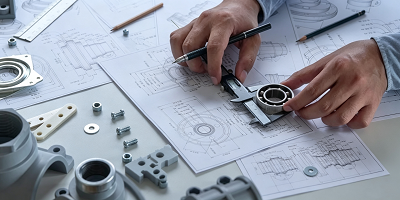
Engineers produce comprehensive engineering drawings to document all these technical parameters for internal teams and external manufacturing partners. After documentation is complete, optimisation work commences. Teams test different combinations of dimensions, component orientations and mechanical fits to boost overall product performance while keeping costs under control.
8. Prototype Building and Iterative Validation
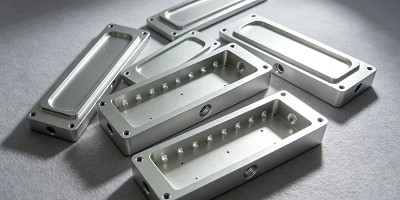
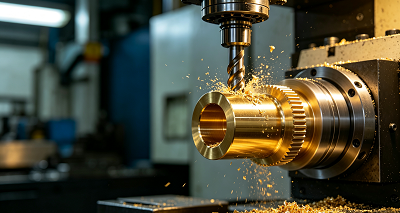
This stage transforms digital design files into physical, testable hardware. Rapid manufacturing technologies including 3D printing and CNC machining are commonly deployed to build functional prototypes.
Physical units then undergo rigorous testing regimes: stress‑to‑failure trials, fatigue cycling and overload simulations replicate real‑world operating scenarios. Test outputs expose hidden defects and performance shortfalls. This phase is inherently iterative; newly discovered flaws trigger design revisions and fresh prototype builds.
Parallel to hands‑on testing, teams run Design for Manufacturability (DFM) assessments. Minor geometry tweaks — for instance rounding sharp internal corners — simplify machining workflows without hurting product functionality. After multiple build‑test‑revise loops conclude, the design becomes fully prepared for batch manufacturing.
9. Transition to Full‑Scale Production
Production marks the final milestone of the engineering design lifecycle, where finished goods are built and ultimately delivered to end‑users. Errors here carry heavy financial consequences, so thorough preparation is mandatory.
The design team hands over complete technical packages to manufacturing divisions. Production specialists craft manufacturing schedules informed by delivery deadlines, selected production techniques, DFM feedback, order volume and material availability. Low‑volume projects tend to leverage CNC machining or vacuum casting, while mass‑run items may rely on injection moulding or die‑casting.
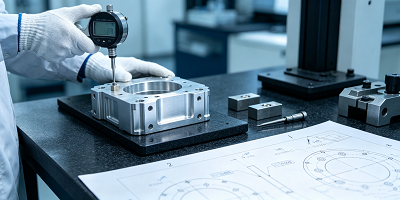
Every manufactured unit passes strict quality assurance checks covering dimensional tolerances, surface finish standards and heat‑treatment requirements. Many businesses adopt formal quality benchmarks, such as Six‑Sigma defect rate targets. Once products pass inspection, they move to packaging and enter supply‑chain distribution, bringing the full engineering design cycle to completion.
Must‑Have Competencies for Modern‑Day Design Engineers
Engineering design keeps evolving, continuously absorbing new disciplines and cutting‑edge tools. To stay competitive, design engineers need to cultivate several core capabilities:
Solid Foundational Engineering Expertise
Deep technical knowledge forms the base of competent design work. This includes familiarity with machine component principles, thermal‑fluid dynamics, manufacturing processes and CAD software suites. Exact required subject knowledge shifts across different industry verticals, so early specialisation helps aspiring engineers build targeted expertise.
Innovative, Solution‑Oriented Thinking
Design work revolves around solving complex challenges. Engineers need to invent original approaches that simultaneously satisfy technical specifications, industry standards and practical real‑world constraints. Hands‑on project experience is one of the best ways for emerging professionals to sharpen creative‑problem‑solving muscle.
Cross‑Team Collaboration and Clear Communication
Complex design projects are almost never completed by solo contributors. Engineers routinely collaborate with mixed groups of technical and non‑technical staff. Miscommunication can create severe downstream problems: for example, poorly relayed quality expectations can lead to defective manufactured outputs. Strong teamwork and precise information sharing keep whole projects aligned toward shared objectives.
The Interplay Between Engineering Design and Design for Manufacturability
Design for Manufacturability (DFM) is tightly interwoven with the broader engineering design workflow. DFM is a specialised discipline focused on adjusting part geometry so items can be produced more affordably, quickly and reliably — all without sacrificing core product functionality.
A typical DFM adjustment for CNC‑machined hardware includes adding fillets to interior corners, removing overly narrow deep grooves and avoiding excessively thin wall sections. These small geometry adjustments reduce component rejection rates, shorten machining cycle times and cut material waste, while leaving end‑user experience unchanged. Integrating DFM thinking early avoids costly redesigns after design finalisation.
Final Thoughts
The engineering design methodology delivers a repeatable, organised framework for tackling product challenges. Breaking large projects into structured phases helps development teams manage complexity, organise workflows and minimise expensive late‑stage surprises. Though presented as sequential steps, real‑world practice involves frequent looping back to fix assumptions uncovered during testing or feasibility reviews.
Frequently Asked Questions
Why is prototyping so vital within engineering design cycles?
Prototyping validates design performance well before mass production kicks off. Complex engineering work almost always contains unforeseen weak points. Building and testing physical prototypes reveals those defects early on, enabling iterative improvements before significant capital is invested in tooling and large‑batch production.
What tool categories support engineering‑design activities?
Engineers leverage a broad toolkit: CAD platforms for geometry creation, CAE and FEM simulation software for performance prediction, alongside lifecycle analysis tools and even machine‑learning‑enhanced design aids. Tool selection varies based on project stage and industry context.
What criteria should guide manufacturer selection for engineering projects?
Key evaluation points include the manufacturer’s production capabilities, service quality level, cost structures, accessible material options and responsiveness of customer support.