Machining Depth of Cut (DOC): Complete Guide to Calculation, Selection and Process Optimization
What Is Depth of Cut in Machining?
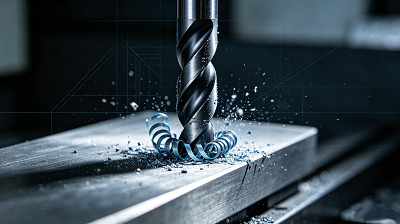
Depth of cut refers to the vertical distance the cutting tool penetrates into the workpiece surface in a single cutting pass, which determines the thickness of the material layer removed in one pass. It is usually measured in millimeters (mm) or inches, and is divided into two core categories especially in milling processes:
- Axial Depth of Cut (ADOC / ap): The penetration depth of the tool along its own axis direction, that is, the cutting depth perpendicular to the workpiece mounting surface.
- Radial Depth of Cut (RDOC / ae): The engagement width of the tool along the radial direction, which reflects how much of the tool diameter is involved in cutting in a single pass.
To put it simply, you can think of it as planing a wooden board: the axial depth of cut decides how thick a layer of wood shavings you shave off each time, while the radial depth of cut decides how wide the planing path is. For turning processes, since the workpiece rotates and the tool feeds linearly, the depth of cut usually refers to the radial cutting depth, that is, the thickness of the material removed from the diameter direction.
Why Precise Control of Depth of Cut Matters
The setting of depth of cut does not only affect the material removal rate, but also exerts a comprehensive impact on the entire machining system:
- Surface finish and dimensional accuracy Excessively large depth of cut will aggravate the plastic deformation of the workpiece material, and easily cause built-up edge (BUE) on the tool tip when processing plastic metals. The accumulated BUE will fall off intermittently, scratch the machined surface, and cause dimensional deviation. On the contrary, if the depth of cut is too small during finishing, the cutting edge will not be able to cut into the material normally, resulting in squeezing and friction instead of shearing, which will also deteriorate the surface quality.
- Tool wear and service life The increase of depth of cut will lead to longer contact length between the cutting edge and the workpiece, greater cutting heat generation, and accelerated abrasive wear and thermal wear of the tool. For tools with poor rigidity, overly deep cutting will also cause edge chipping or even breakage due to excessive cutting force.
- Machining system stability Excessive depth of cut will increase cutting force significantly, which may cause vibration of the machine tool, fixture or workpiece, namely "chatter". Chatter will leave regular vibration marks on the workpiece surface, and in severe cases, it will damage the machine tool spindle or cause the workpiece to be scrapped.
- Production energy consumption and efficiency Within the allowable range of equipment and tool rigidity, increasing the depth of cut appropriately can reduce the number of cutting passes and significantly improve material removal efficiency. However, blindly increasing the depth of cut will lead to frequent tool changes and shutdown adjustment, which will reduce the overall production efficiency instead.
How Depth of Cut Works With Other Machining Parameters
Depth of cut does not exist independently; it needs to be matched with cutting speed, feed rate, tool geometry and cooling method to achieve the best processing effect.
Matching with cutting speed and feed rate
These three parameters are collectively known as the "three elements of cutting". For rough machining, the priority is usually to set a larger depth of cut first, then a moderate feed rate, and finally adjust the cutting speed according to the tool life limit. For finishing, the depth of cut is usually set according to the remaining allowance, and the feed rate and cutting speed are increased appropriately to improve surface quality.
For example, when rough machining carbon steel parts, a depth of cut of 2–4 mm can be selected with a medium feed rate; when finishing, the depth of cut is reduced to 0.2–0.5 mm, and the cutting speed is increased at the same time.
Interaction with cooling and lubrication
When the depth of cut is small, the chip is thin and the contact area between the tool and chip is small, so the cutting heat is more concentrated on the tool tip. At this time, if flood coolant is used blindly, the chip will curl more severely, reducing the heat dissipation area and aggravating tool wear instead. For small depth of cut finishing, oil-based cutting fluid or mist cooling is usually more effective.
When the depth of cut is large, the chip is thick and the heat generation is large. Sufficient flood coolant can effectively take away the cutting heat and reduce the temperature of the cutting area.
Coordination with tool rake angle
For materials with high plasticity and low hardness, a larger rake angle matched with a moderate depth of cut can reduce cutting deformation and obtain better surface quality. For hard and brittle materials, a smaller rake angle should be used with a smaller depth of cut to avoid edge chipping caused by excessive impact force.
How to Calculate and Select Depth of Cut
The specific value of depth of cut needs to be determined according to the processing type, workpiece material, tool performance and machine tool rigidity. The following are the calculation and selection methods for typical processes:
Depth of cut in turning
In CNC turning, the depth of cut (back engagement) refers to the vertical distance from the machined surface to the unprocessed surface, which is half of the diameter difference of the workpiece before and after processing. The calculation formula is:
ap = (Dw - Dm) / 2
Where:
- ap: depth of cut (mm)
- Dw: diameter of the workpiece before cutting (mm)
- Dm: diameter of the workpiece after cutting (mm)
Selection principle by process:
- Rough turning: 2–5 mm for ordinary carbon steel, 1–3 mm for stainless steel and high-temperature alloy
- Semi-finish turning: 0.5–2 mm
- Finish turning: 0.1–0.5 mm
Depth of cut in milling
Milling is divided into axial depth of cut (ap) and radial depth of cut (ae), and the selection needs to consider tool diameter and material properties:
- For end mills with diameter > 20 mm processing ordinary steel: axial depth of cut is generally 0.5–1.5 times the tool diameter, radial depth of cut is 0.5–1 times the tool diameter
- For small-diameter tools (≤6 mm) or processing hard materials: axial depth of cut should be controlled within 0.5 times the tool diameter to avoid tool breakage caused by insufficient rigidity
- For aluminum alloy and other non-ferrous metals with good machinability: the axial depth of cut can be appropriately increased to 1–3 times the tool diameter under the condition of sufficient machine tool rigidity
In actual production, the depth of cut should also be adjusted according to the total machining allowance. For example, if the total allowance is 3 mm, it can be divided into 2 passes: 2.5 mm for roughing and 0.5 mm for finishing.
Depth of Cut vs. Chip Thickness: What’s the Difference?
A common misunderstanding in machining is to equate depth of cut with chip thickness, but the two are essentially different concepts.
In the cutting process, the material does not directly become chips of the same thickness as the depth of cut, but undergoes shear deformation along a certain shear plane. After shearing, the chip will be compressed and thickened, so the actual chip thickness is always greater than the set depth of cut.
We use the cutting thickness ratio (r) to describe the relationship between the two:
r = ap / hc
Where:
- ap: depth of cut (uncut chip thickness)
- hc: actual chip thickness after deformation
The value of r is always less than 1, and its reciprocal is called the chip compression ratio. The larger the compression ratio, the more severe the plastic deformation of the material during cutting, and the worse the machinability of the material. This parameter can help us judge the cutting performance of materials and optimize the tool rake angle.
Depth of Cut’s Impact on Cutting Force and Power
The change of depth of cut directly affects the magnitude of cutting force and the power consumption of the machine tool, which is an important basis for machine tool selection and fixture design.
Relationship with cutting force
Under the condition that other parameters remain unchanged, the main cutting force is approximately linearly proportional to the depth of cut. That is, when the depth of cut is doubled, the main cutting force is also approximately doubled. This is because the increase of depth of cut increases the cross-sectional area of the cutting layer, and the total resistance of the material to be cut increases accordingly.
Calculation of machining power
The power required for cutting is the product of the main cutting force and the cutting speed, and the formula is:
Pc = (Fc × Vc) / 60000
Where:
- Pc: cutting power (kW)
- Fc: main cutting force (N)
- Vc: cutting speed (m/min)
Since depth of cut affects cutting force, when setting a large depth of cut, it is necessary to confirm whether the rated power and rigidity of the machine tool can meet the requirements, so as to avoid problems such as stalling or spindle damage during processing.
Common Mistakes in DOC Setting and Optimization Tips
- Mistake 1: The larger the depth of cut, the higher the efficiency When the tool or machine tool rigidity is insufficient, too large depth of cut will cause chatter or tool breakage, which will increase the processing cost instead. It is recommended to match the depth of cut according to the maximum load that the processing system can bear.
- Mistake 2: The smaller the finishing depth, the better the surface quality When the depth of cut is less than the radius of the tool edge, the cutting edge cannot normally cut into the material, but only extrudes and rubs the workpiece surface, which will cause work hardening and reduce the surface quality. The finishing depth should be at least 2–3 times the edge radius of the cutting tool.
- Mistake 3: Using the same DOC for all materials Materials with different hardness and plasticity have great differences in cutting deformation. For example, the depth of cut for processing cast iron can be larger, while for titanium alloy, it is necessary to reduce the depth of cut appropriately and match a reasonable cutting speed to control the cutting temperature.
Conclusion
Depth of cut is a basic but critical parameter in CNC machining. A reasonable DOC setting can not only balance processing efficiency and surface quality, but also extend tool life and reduce comprehensive production costs. In actual production, it is necessary to comprehensively consider the workpiece material, tool performance, machine tool rigidity and processing requirements, and match the cutting speed and feed rate synchronously, so as to give full play to the best performance of the processing system.