Micro CNC Machining Explained: Core Technology & Practical Guide for Precision Manufacturing
What Is Micro CNC Machining?
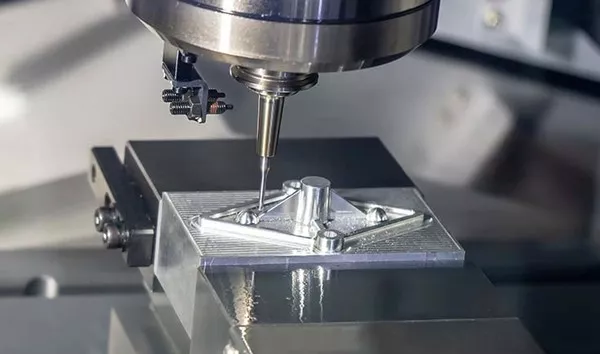
Micro CNC machining is an ultra‑precision subtractive manufacturing process that removes material at the micrometre scale. It uses computer numerical control (CNC) technology to drive specialised machine tools—such as micro milling machines, micro EDM (electrical discharge machining) units, and micro lathes—that are designed specifically for exceptionally tight tolerances and miniature feature sizes.
The defining characteristic of micro CNC machining is its working scale: it can produce parts and structures with features as small as 1 micrometre (µm). To put that in perspective, a human hair is roughly 50–100 µm in diameter, meaning micro machining achieves accuracy down to a fraction of a hair’s thickness.
How Micro CNC Machining Works
The process begins with a detailed CAD (Computer‑Aided Design) model, which serves as the digital blueprint for the finished part. Next, operators use CAD/CAM (Computer‑Aided Manufacturing) software to program the CNC machine, converting the 3D model into precise toolpaths and machine‑readable G‑code instructions.
The CAM program controls the positioning and movement of the cutting tools on the micro mill or lathe with extreme precision. The tool follows the predefined paths, selectively removing material from the workpiece to gradually form the desired shape and add intricate micro‑features. The entire process is highly automated, ensuring repeatability and consistency across production runs.
Key Advantages of Micro CNC Machining
1. Ultra‑Tight Tolerances
The most outstanding benefit is the ability to hold extremely strict dimensional tolerances—often down to ±1 µm or even less. When conventional CNC machining cannot meet the requirements for miniature sizes and ultra‑fine tolerances, micro machining provides a reliable alternative.
2. Complex Micro‑Features
Micro CNC machining can create intricate geometric features that standard methods simply cannot achieve. Micro milling, for example, uses tools with diameters smaller than 0.1 mm, enabling superior surface finishes and complex 3D contours on tiny components.
3. Wide Material Compatibility
This technology works with a broad range of high‑performance engineering plastics and metals. Such versatility allows manufacturers to choose the optimal material for each application, meeting diverse industry needs without compromising precision.
Common Materials Used in Micro CNC Machining
Engineering Plastics
High‑performance polymers like PEEK, Teflon (PTFE), and Ultem (PEI) are widely used in micro CNC machining. They offer excellent aesthetics, heat resistance, high strength, dimensional stability, and resistance to UV light and weathering, making them popular in automotive, aerospace, and consumer electronics.
Metals
Copper – With its superb thermal and electrical conductivity, copper is frequently machined for electronic components, cooling systems, heat sinks, and printed circuit boards (PCBs).
Stainless Steel – Valued for its high strength and outstanding corrosion resistance, stainless steel is ideal for medical devices, orthopaedic implants, and surgical instruments. Its compatibility with sterilisation processes and long‑term durability make it a top choice in healthcare.
Titanium – Renowned for its exceptional strength‑to‑weight ratio, resistance to extreme temperatures, and corrosion resilience, titanium is extensively used in aerospace components. Medical device manufacturers also rely on titanium for implants and other critical parts.
Major Application Fields
Medical Devices
Micro CNC machining is indispensable in the medical sector—from precision‑cutting edges on minimally invasive surgical tools to orthopaedic implants, diagnostic equipment, and therapeutic devices. The technology enables the miniaturisation and reliability required for life‑saving innovations.
Aerospace
Aerospace components often operate under extreme conditions, demanding both high precision and superior material properties. Micro‑machining of titanium alloys and other advanced materials makes possible the production of engine parts, navigation systems, sensors, and other mission‑critical components.
Consumer Electronics
As electronic devices become smaller and more integrated, micro CNC machining is essential for producing precision structural parts, connectors, IC package leads, and other tiny yet vital elements.
Automotive Industry
The rise of new energy and high‑performance vehicles has increased demand for precision components. Micro machining plays a key role in sensors, fuel injection systems, and precision transmission parts, contributing to improved efficiency and performance.
Practical Considerations for Successful Micro CNC Machining
Tool Selection and Management
In micro machining, cutting tools can be as small as 0.03 mm in diameter or even less. Choosing the right tool, proper clamping, and monitoring tool wear are critical to maintaining machining quality. Advanced tool materials and coatings can significantly enhance process stability and tool life.
Environmental Control
Temperature fluctuations are one of the major factors affecting micron‑level accuracy. Dedicated climate‑controlled workshops, combined with machine thermal compensation systems, effectively eliminate dimensional deviations caused by thermal expansion and contraction.
In‑Process Monitoring and Quality Assurance
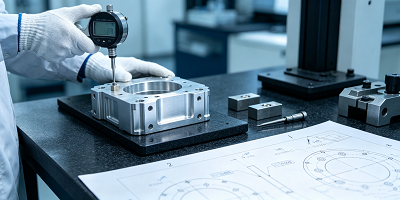
Integrating inspection throughout the production cycle is essential. On‑machine probes verify workpiece positioning and dimensions during machining, allowing for real‑time corrections. After machining, high‑precision coordinate measuring machines (CMMs) perform full‑scale inspections. Moreover, statistical process control (SPC) helps monitor variables such as temperature changes, tool wear, and clamping forces, keeping every parameter within acceptable limits.
Conclusion
Micro CNC machining represents the cutting edge of precision manufacturing. Driven by the demands of medical, aerospace, consumer electronics, and automotive industries, this technology continues to push the boundaries of what is achievable in terms of accuracy and miniaturisation. Mastering the fundamentals of micro manufacturing is vital for companies that wish to remain competitive in fields where precision is paramount.
With ongoing technological advancements—from nanometre‑grade grinding machines to intelligent process control systems—micro CNC machining will continue to drive the evolution of manufacturing toward smaller, more complex, and more reliable products, providing a solid foundation for innovation across all sectors.