Annealing Heat Treatment: Full Guide to Principle, Types & Industrial Uses
1. Basic Overview of Metal Heat Treatment
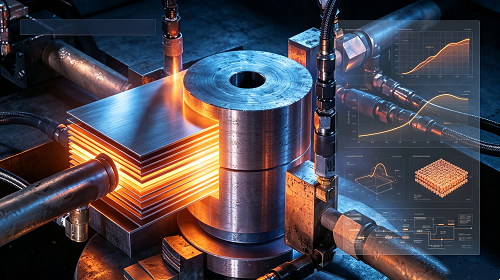
Heat treatment refers to a precise thermal processing technology that changes metal physical and partial chemical properties through standardized heating, heat preservation and cooling cycles.
Heat treatment represented by annealing can reconstruct the internal crystal structure of materials, balance hardness, ductility and toughness, and create qualified blank state for bending, drawing, CNC cutting and secondary forming.
2. Definition & Core Logic of Annealing
Annealing is the most widely used softening heat treatment in manufacturing. The standard process flow: heat workpiece to designated target temperature → keep constant temperature for enough holding time → cool down to room temperature at an extremely slow speed inside the furnace.
The core metallurgical change inside the metal: eliminate lattice dislocation defects, release accumulated internal stress, reconstruct uniform strain-free grain structure. After annealing, metal hardness drops significantly, ductility and forming performance are greatly improved, and the machinability of blanks is optimized for follow-up processing.
In short, annealing is equivalent to "resetting" the internal structure of metal to a stable, low-stress equilibrium state.
3. Three Core Metallurgical Stages of Annealing
The whole annealing metallurgical transformation is divided into three sequential, mutually connected stages, each with independent structural adjustment goals, and all parameters (temperature, holding time, cooling rate) need strict engineering control.
Stage 1: Recovery (Stress Relief Stage)
Heat the workpiece to the recrystallization threshold temperature first. At this temperature, dislocation linear defects inside the crystal lattice migrate and disappear spontaneously.
Key effect: A large amount of residual stress generated by cold working, welding and casting is released; metal begins to soften obviously. The original elongated deformed grains will not change shape at this stage, only internal defect density is reduced.
Workpieces need to maintain constant temperature for tens of minutes to several hours to ensure full dislocation elimination.
Stage 2: Recrystallization (Core Stage of Annealing)
Continue heating the metal above recrystallization temperature, between recrystallization point and melting point.
Under thermal excitation, brand new tiny strain-free equiaxed grains nucleate and grow, completely replacing the elongated, stress-bearing deformed grains formed by cold processing. The new grains have far fewer internal dislocations, uniform distribution and isotropic mechanical properties. This stage determines the uniformity of the final material microstructure and is the core link of annealing quality control.
Stage 3: Grain Growth (Balancing Performance Stage)
After recrystallization completes, continuous high temperature environment will promote the new equiaxed grains to expand and merge with each other.
Performance trade-off: Larger grain size improves material impact toughness and energy absorption capacity, but reduces tensile and yield strength — grain boundaries are the key barrier to block dislocation movement.
Engineers adjust holding duration and cooling speed to balance toughness and strength according to product usage requirements. Once the thermal cycle is out of standard range, excessive grain coarsening will cause permanent performance degradation.
After grain growth regulation, shut down the heating system and cool the workpiece slowly inside the furnace without taking it out to avoid thermal shock and secondary stress.
4. Core Purposes of Conducting Annealing Treatment
Manufacturers arrange annealing procedures before or between processing steps mainly for five major performance optimization targets, which can be detected and verified through standard mechanical testing equipment.
4.1 Boost Material Ductility
Ductility represents the plastic deformation capacity of materials under external force. Cold-worked metals become hard and brittle, prone to cracking during bending, stamping and wire drawing. Annealing restores ductility to support continuous forming without fracture risk.
4.2 Reduce Hardness to Lower Machining Cost
Hard blanks cause serious tool wear, prolonged cutting time and poor surface finish after machining. Annealing softens the workpiece, reduces cutting resistance, extends tool service life and improves processing efficiency of CNC lathes and milling machines.
4.3 Eliminate Residual Internal Stress
Casting, welding, stamping and heavy cutting will leave concentrated internal stress inside parts. Unannealed workpieces are easy to deform or crack during storage, finishing and service. Annealing homogenizes grain distribution and eliminates stress concentration points to stabilize dimensional accuracy.
4.4 Upgrade Material Toughness
Toughness reflects the ability to resist fracture under impact load. Uniform grain structure after annealing reduces brittle impurity segregation inside the lattice, effectively improving anti-impact performance of gears, shafts and structural brackets.
4.5 Homogenize Microstructure & Chemical Composition
As-cast and hot-forged metals have uneven component segregation and irregular grain distribution, leading to inconsistent performance in different directions (anisotropy). Long-term constant temperature holding in annealing realizes full atomic diffusion, makes the material microstructure uniform and stable, and achieves consistent mechanical properties in all directions.
5. Main Classifications of Annealing Processes
Different annealing types adopt differentiated heating temperature, holding cycle and cooling modes, matched with steel carbon content and processing requirements. Below are five mainstream industrial annealing technologies:
5.1 Full Annealing
The complete three-stage annealing process mentioned above, mainly applied to low-carbon and medium-carbon steel castings and forgings. Heat above upper critical temperature, fully hold for recrystallization and grain adjustment, then ultra-slow furnace cooling.
Function: Fully refine grains, minimize hardness, maximize ductility, widely used for gear, shaft blank pretreatment.
5.2 Process Annealing (Subcritical Annealing)
Specially designed for low-carbon steel cold working intermediate treatment. Heating temperature is slightly lower than steel’s lower critical temperature (about 727℃ for carbon steel), no phase transformation occurs inside the material.
Core function: Partial stress relief and ductility recovery between multi-pass cold rolling and stamping, shorten processing cycle compared with full annealing. Typical products: automotive sheet metal, load-bearing stamping brackets.
5.3 Spheroidize Annealing
Exclusive for high-carbon steel, tool steel and spring steel. Heat near lower critical temperature with long-time heat preservation or repeated heating-cooling cycles, convert flaky cementite into spherical granular carbide distributed in ferrite matrix.
Advantage: Greatly reduce hardness of high-hardness steel, solve difficult cutting problems, used for cutting tools, bearing parts and spring blanks.
5.4 Isothermal Annealing
Optimized improved version of full annealing, solving the problem of long cooling cycle and uneven hardness of large workpieces.
Process: Heat to austenitizing temperature first, then rapidly cool to a fixed intermediate temperature and hold isothermally until all microstructure transformation completes, then cool freely to room temperature.
Advantage: Uniform hardness across the whole workpiece, small deformation, shorter production cycle, suitable for alloy steel large forgings.
5.5 Stress Relief Annealing
Low-temperature annealing variant, heating temperature far below critical point, only target residual stress elimination without obvious grain transformation. Widely used for welded assemblies, precision machined parts to prevent later dimensional distortion.
6. Materials Suitable for Annealing Operation
Annealing has strong material compatibility, covering most metal alloys and partial non-metallic industrial materials, with consistent core optimization goals: soften material, remove stress, improve forming performance.
- Carbon & Alloy Steel: Reduce hardness, improve cutting and toughness, the most widely annealed industrial material
- Cast Iron: Soften casting blank, eliminate casting stress, simplify rough machining
- Copper & Copper Alloys (Brass, Bronze): Restore ductility for wire drawing, pipe fitting forming, improve electrical conductivity
- Precious Metals (Gold, Silver): Soften for jewelry carving, bending and molding
- Aluminum & Aluminum Alloys: Used for can stamping, aircraft thin panel forming
- Nickel-Based High-Temp Alloys: Jet engine wear-resistant high-temperature component pretreatment
- Industrial Glass: Release thermal stress during molding, enhance anti-cracking performance
- Engineering Thermoplastics: Eliminate molding internal stress, reduce finished product warpage
7. Annealing vs. Other Classic Heat Treatment Processes
Many manufacturers confuse annealing with tempering, normalizing, quenching and precipitation hardening. The core differences lie in temperature window, cooling rate and final material performance, sorted as below:
Annealing vs Tempering
Tempering is always performed after quenching hardening; it properly lower hardness and brittleness to boost toughness. Annealing is usually a pre-processing step before forming/machining, focusing on overall softening and stress elimination.
Annealing vs Normalizing
Normalizing cools naturally in air after high-temperature heating, faster cooling speed than furnace cooling of annealing. Normalizing obtains finer grains, higher strength and hardness, while annealing gets softer, more ductile balanced structure. Normalizing is often used for casting grain homogenization with low performance requirements.
Annealing vs Quenching
Quenching adopts ultra-fast cooling (water/oil cooling), locks high-hardness brittle martensite microstructure, used for tool hardening. Annealing relies on slow furnace cooling to form soft equilibrium grains, opposite performance orientation.
Annealing vs Precipitation Hardening
Precipitation hardening strengthens alloy by precipitating tiny reinforcing particles to block dislocation movement, increasing hardness and strength. Annealing weakens material strength by releasing defects and coarsening grains, two opposite property adjustment directions.
8. Practical Industrial Application Scenarios
Sorted table of matching materials, annealing types and terminal products for reference of process engineers:
| Material Category | Annealing Type | Typical Industrial Application |
|---|---|---|
| Medium Carbon Steel | Full Annealing | Gear, transmission shaft, mechanical structural blank |
| High Carbon Tool Steel | Spheroidize Annealing | Cutting tools, bearing, spring manufacturing blanks |
| Low Carbon Steel Sheet | Process Annealing | Automobile body panels, cold stamping brackets |
| Aluminum Alloy | Solution Annealing | Beverage cans, aerospace thin wall panels |
| Copper Alloy | Stress Relief Annealing | Conductive wire, plumbing pipe fittings |
| Brass | Low-Temp Annealing | Musical instrument parts, decorative metal crafts |
| Nickel Superalloy | Isothermal Annealing | Aeroengine high-temperature wear components |
| Soda Lime Glass | Low-Temp Annealing | Daily-use glassware, optical transparent parts |
| High Precision Plastic | Thermal Annealing | Low-warpage precision electronic plastic shells |
9. Precise CNC Machining & Supporting Annealing Service
Our factory integrates full-process manufacturing solutions including CNC precision machining and matched annealing heat treatment.
Equipped with full-size sealed annealing furnaces, temperature constant control system and atmosphere protection equipment, we can customize heating temperature, holding time and cooling curve according to alloy composition, workpiece thickness and customer performance standards.
10. Summary
Annealing acts as the foundational softening heat treatment in modern metal manufacturing. Through three controllable metallurgical stages: recovery, recrystallization and grain growth, it systematically releases internal stress, adjusts grain structure and balances mechanical properties of raw materials.
11. Frequently Asked Questions
Q1: How long does a complete annealing cycle last?
The total time ranges from dozens of minutes to over ten hours, determined by three factors: workpiece material, wall thickness and target mechanical properties. Thick alloy steel forgings need longer heat preservation and slow cooling time to ensure uniform internal temperature.
Q2: Can the microstructure change caused by annealing be reversed?
No. Annealing changes the crystal grain state permanently. To restore high hardness and strength, secondary cold working or quenching & tempering heat treatment must be carried out again, simple heating cannot reverse the annealing effect.
Q3: What are the inherent limitations of annealing treatment?
- After annealing, material yield strength decreases, not suitable for parts requiring high tensile load without secondary strengthening;
- Long furnace cooling cycle occupies equipment, increases energy consumption and production cycle cost;
- Excessive high-temperature holding will lead to over-grown grains, resulting in insufficient impact strength of finished parts.
Q4: When should we choose isothermal annealing instead of full annealing?
For large-size alloy steel castings and forgings with strict uniform hardness requirements, isothermal annealing shortens cooling time and avoids hardness difference between surface and core of thick workpieces, effectively reducing post-processing deformation risk.