Causes and Prevention of Delayed Deformation for Plastic CNC Machining Parts
Causes and Prevention of Delayed Deformation for Plastic CNC Machining Parts
Introduction
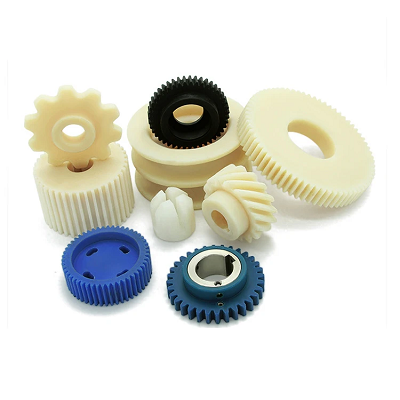
Plastic CNC parts are widely used in automotive, medical, electronic and industrial fields for their light weight, corrosion resistance and high precision. Unlike stable metal materials, plastics feature low hardness, high toughness and obvious stress creep. A common production issue is delayed deformation: parts pass dimensional checks right after CNC machining but gradually warp, shrink or distort hours or days later, causing dimensional errors and batch defects. This article summarizes the key causes and practical solutions for delayed deformation in plastic CNC machining.
Core Causes of Delayed Deformation
1. Residual Internal Stress Release
Plastic blanks retain inherent internal stress from extrusion and injection molding. CNC cutting and material removal further generate new machining stress. Due to slow stress relaxation of plastics, internal stress cannot be fully released during processing and initial inspection. After clamping is released, the residual stress balances slowly at room temperature, resulting in delayed structural deformation and dimensional deviation.
2. Thermal Deformation and Temperature Creep
Plastics have high thermal expansion coefficients and poor heat resistance. High-speed CNC cutting produces concentrated local heat, causing uneven thermal expansion and molecular relaxation. Though dimensions look stable while parts are hot, uneven shrinkage occurs during cooling. Long-term ambient temperature changes also trigger material creep, aggravating delayed warpage and deformation.
3. Improper Clamping and Machining Parameters
Excessive clamping force creates invisible elastic deformation on plastic workpieces, leading to delayed rebound and warpage after fixture release. In addition, improper cutting speed, over-large cutting depth and unfit tools cause severe vibration and material extrusion, damaging plastic molecular structure and producing latent deformation that appears gradually after placement.
4. Material and Environmental Factors
Common flexible plastics like POM, PA and ABS are highly susceptible to delayed deformation, while rigid PC and acrylic tend to shrink or crack under stress. Ambient temperature and humidity changes also affect stability: humid air causes water absorption and expansion, while low temperature leads to shrinkage, both resulting in delayed dimensional changes.
Effective Solutions
1. Pre-Process Stress Relief
Perform natural aging or low-temperature baking on plastic blanks before machining. Placing raw materials in a constant-temperature environment for 24–48 hours effectively releases inherent residual stress, eliminating raw material-related deformation risks and improving part stability.
2. Optimize CNC Machining Processes
Adopt layered cutting and multi-pass finishing to reduce one-time material removal and machining stress. Lower cutting speed and feed rate, and use sharp professional plastic cutting tools to reduce heat accumulation and extrusion force. For high-precision parts, complete roughing first, let parts rest 12–24 hours for stress release, then perform finishing to ensure long-term dimensional stability.
3. Optimize Clamping and Fixtures
Use flexible contact fixtures instead of rigid clamping. Expand clamping contact areas to disperse pressure and avoid local elastic deformation. Appropriately reduce clamping force under stable positioning conditions to prevent extrusion damage and eliminate delayed elastic recovery deformation.
4. Stabilize Processing and Storage Environment
Machine and store parts in constant-temperature and constant-humidity workshops to avoid drastic environmental fluctuations. Place finished parts flat in dry, dust-free conditions for natural stabilization before inspection. For moisture-absorbing materials such as nylon, pre-dry blanks and seal finished products to prevent water absorption deformation.
5. Material Selection and Structural Optimization
Choose high-stability modified plastics for precision parts to reduce creep and stress relaxation. Optimize part design by avoiding ultra-thin walls, asymmetric structures and sharp transitions, balancing internal stress and fundamentally improving the deformation resistance of plastic CNC parts.
Conclusion
Delayed deformation of plastic CNC parts stems from the combined effects of residual material stress, machining stress, thermal influence and environmental changes, rather than simple machining errors. Standardized pre-treatment, optimized machining parameters, reasonable clamping methods and stable storage conditions can effectively control delayed deformation, improving the dimensional accuracy and batch consistency of precision plastic CNC components.