Why Ultem PEI Is Redefining Precision Manufacturing: Material Advantages & Real-World CNC Applications
Key Material Characteristics That Make Ultem Stand Out
Ultem PEI distinguishes itself through a unique combination of thermal endurance, mechanical robustness, and built-in safety properties — attributes that position it as a trusted solution for the most demanding engineering challenges.
Extreme Heat Resistance & Built-In Fire Safety
One of Ultem's most remarkable features is its ability to maintain structural integrity at elevated temperatures. The material performs reliably in continuous service conditions ranging from 170°C to 210°C, with a heat deflection temperature surpassing the 200°C threshold. Moreover, Ultem possesses intrinsic flame-retardant properties, achieving UL94 V-0 classification without requiring any flame-retardant additives — a critical advantage for applications where fire safety is non-negotiable.
Mechanical Strength, Rigidity, and Precision Consistency
Ultem delivers mechanical performance that rivals many metals. This is especially true for glass-fiber-reinforced variants such as Ultem 2300, which exhibit extraordinary stiffness, creep resistance, and dimensional stability. Whether subjected to sustained mechanical loads or thermal cycling, the material retains its form and functional properties, making it an excellent candidate for structural components and critical functional parts.
When it comes to CNC fabrication, Ultem shines with superior machinability and tight dimensional control. Manufacturers can achieve intricate geometries with high precision, smooth surface finishes, and efficient production cycles — qualities that make it ideal for both rapid prototyping and low-volume manufacturing of precision components.
Electrical Insulation & Chemical Durability
Beyond mechanical and thermal performance, Ultem offers excellent dielectric properties and arc resistance, along with impressive chemical stability. It resists exposure to various hydrocarbons, alcohols, and acidic substances, with vulnerability limited primarily to strong alkaline environments. This broad chemical compatibility extends its utility to precision components in electronics, electrical systems, and chemical processing equipment.
Real-World Implementation: Ultem in Action
The practical advantages of Ultem become even clearer when examining actual production scenarios. Below, we explore how two prominent Ultem grades address distinct engineering challenges across different industries.
Ultem 2300: The Go-To Grade for Heavy-Duty Structural Components
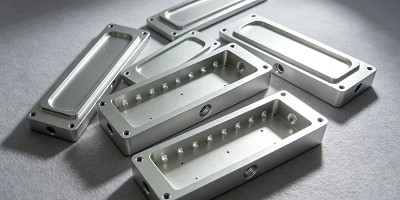
Reinforced with 30% glass fiber, Ultem 2300 excels in applications requiring structural integrity under load. When precision-CNC-machined and finished with sandblasting, the resulting components offer not only dimensional stability and exceptional deformation resistance but also an elegant matte surface that elevates both aesthetics and wear resistance.
In aerospace and high-end machinery sectors, Ultem 2300 has successfully displaced conventional metal parts, delivering simultaneous reductions in both weight and production expenses.
Precision Machining Approach for an Intricate Aerospace Enclosure
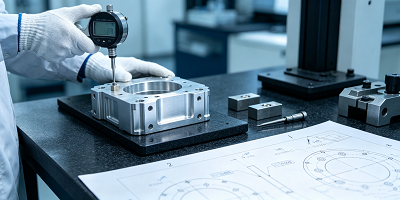
Consider a complex aerospace housing manufactured from Ultem 2300. This component features multiple critical dimensional tolerances at levels of precision that challenge even metal CNC capabilities. To meet these exacting standards, manufacturers leverage Ultem's favorable machining characteristics alongside advanced fabrication techniques, implementing a phased machining strategy:
-
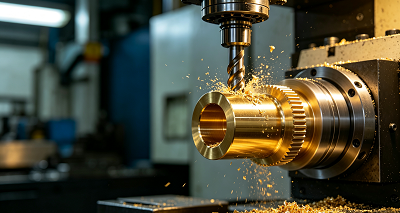
Rough Machining Phase: Ball-nose end mills are employed to rough out curved sidewall profiles, effectively managing machining stresses and material distortion while leaving consistent stock for subsequent finishing operations.
-
Finish Machining Phase: Flat-end mills execute the final contouring, delivering premium surface quality and precise dimensional accuracy.
Tackling Internal Complexity with 5-Axis Capabilities
Tight tolerances are only part of the challenge. The real complexity lies in the part's internal geometry — hollow sections, deep channels, and multiple cavities.
The solution involves a specialized machining approach combining multi-position precision fixturing with 5-axis CNC technology. This setup enables accurate multi-angle milling of internal features, ensuring complete alignment with design specifications.
Consistent quality across entire production batches further validates Ultem 2300's machining stability. The material also accommodates various surface treatments beautifully — from sleek painted black finishes to textured sandblasted surfaces, each delivering distinct visual and functional benefits.
Ultem 1000: Perfect for Transparent Functional Prototyping
Ultem 1000 brings together high optical clarity, mechanical robustness, and thermal endurance — a combination that makes it particularly valuable for CNC-machined functional prototypes.
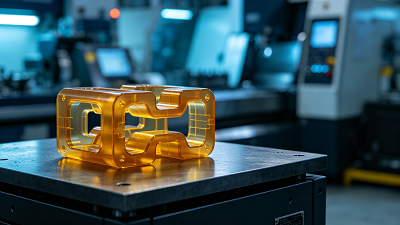
Its semi-transparent amber structure allows engineers to visually inspect internal flow paths, air channels, and transmission dynamics directly. Meanwhile, its high-temperature resistance and mechanical integrity ensure dependable performance during short-duration functional testing.
The amber-housings fabricated from Ultem 1000 are engineered for harsh industrial settings, satisfying requirements for thermal resistance, chemical compatibility, and electrical insulation. When stacked against other transparent polymers, Ultem 1000 offers superior internal visibility while maintaining exceptional structural performance — making it the material of choice for R&D validation and engineering evaluation phases.
Final Thoughts
Ultem PEI materials deliver stable performance above 200°C, provide metal-comparable strength with substantial weight reduction, and offer excellent CNC processability. With inherent flame retardancy and broad industrial applicability, Ultem is expanding the horizons of what engineering plastics can accomplish across aerospace, electronics, and medical manufacturing landscapes.
For businesses seeking custom CNC machining solutions for high-performance engineering plastics including Ultem, partnering with an experienced manufacturer ensures tight tolerance control, expert design-for-manufacturing guidance, and consistent quality from initial prototyping through low-volume production.