CNC Precision Machining: The Full Manufacturing Process of Stainless Steel Ball Stud Bolts
CNC Precision Machining: The Full Manufacturing Process of Stainless Steel Ball Stud Bolts
Introduction
In the fields of automotive gas springs, hydraulic support struts and automated machinery, tiny ball stud bolts serve as the core connecting parts of universal hinge assemblies. They demand ultra-high precision in spherical surface smoothness, thread concentricity and hex shoulder positioning. Traditional stamping and thread rolling processes fail to meet strict tolerance standards, so CNC turning has become the standard production solution for these precision fasteners. This article takes 304 stainless steel ball stud bolts as an example to break down the complete CNC manufacturing workflow from raw material to finished product.
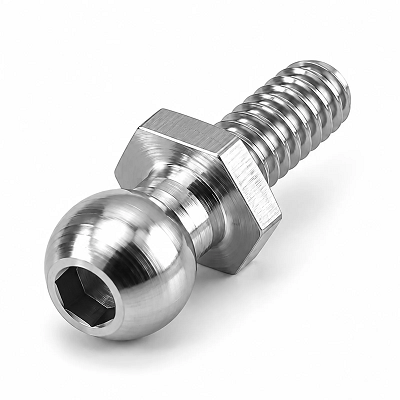
1. Why Must Ball Stud Bolts Be Manufactured by CNC Machining?
Ordinary standard bolts are mass-produced by cold heading, which only fits simple hex-head workpieces. Ball stud bolts feature three complex structural characteristics that rule out basic forming methods:
-
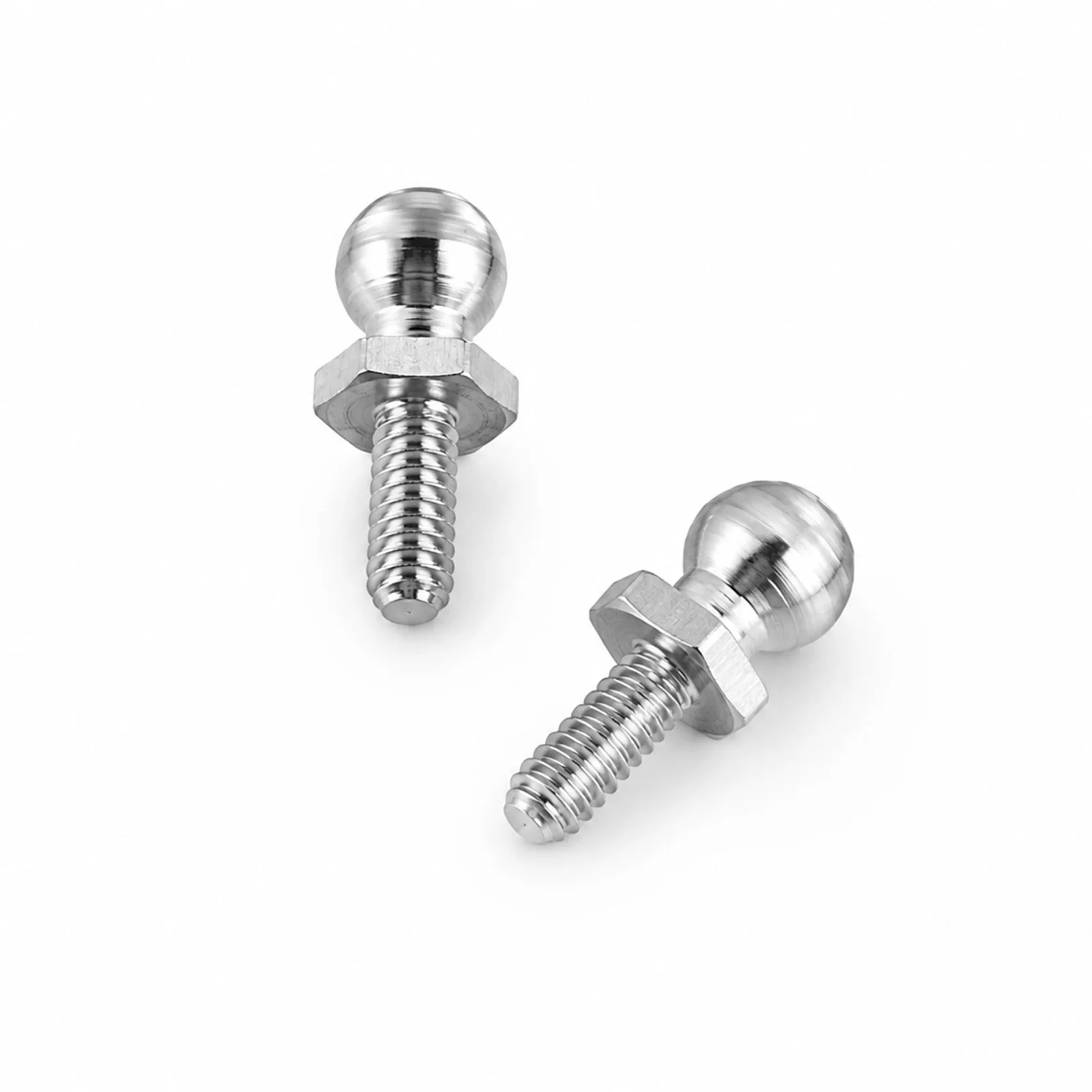
Integral spherical end head
The curved ball surface requires mirror-level smooth finish. Cold heading often causes cracks and uneven spherical surfaces, while CNC tool path control limits the roundness tolerance of the ball within 0.01 mm.
-
Locating hex shoulder
The hexagonal limiting step between the ball head and thread must maintain perfect concentricity with the screw thread. CNC one-time clamping and synchronous turning eliminates offset errors of the shoulder.
-
Custom non-standard dimensions
Customers can customize ball diameter, thread length and hex thickness as required. CNC numerical control programs adjust parameters instantly without costly stamping dies, supporting both small-batch and mass production.
304 stainless steel round bar is selected as raw material. Parts after CNC turning feature rust resistance, acid & alkali resistance and stable mechanical strength, suitable for outdoor automotive equipment and damp industrial environments.
2. Complete CNC Machining Production Flow
Step 1: Raw Material Preparation — Solid Stainless Steel Round Bar
Bright solid 304 stainless steel round bars in standard diameters are cut into fixed-length blanks according to custom bolt specifications. Bars are deburred and cleaned to remove surface oxidation before entering CNC lathes.
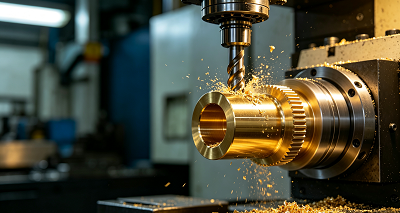
Step 2: CNC Lathe One-Clamp Forming
Bar blanks are fixed inside CNC turning centers in a single clamping cycle to complete all key cutting processes without secondary repositioning:
- External turning to form smooth spherical ball head;
- Cutting hexagonal limiting shoulder for installation positioning;
- Precision thread turning for metric coarse/fine threads;
- End face finishing to eliminate sharp burrs.
Single clamping guarantees consistent concentricity, avoiding assembly jitter when matched with gas spring connectors.
Step 3: Surface Polishing & Deburring
After CNC cutting, semi-finished bolts undergo mirror polishing to remove tiny tool marks on the ball surface. The final glossy finish improves rotation smoothness for universal joint movement and enhances anti-corrosion performance of stainless steel.
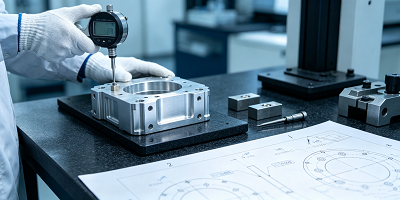
Step 4: Precision Inspection
Every batch undergoes dimensional testing via calipers and micrometers to check ball diameter, thread length, hex shoulder size and thread tolerance. Unqualified workpieces are screened out to guarantee consistent product accuracy.
Step 5: Packaging & Shipment
Qualified ball stud bolts are packed in standard bulk bags or customized small sets as customer requests, ready for global shipment to automotive hardware, machinery and gas spring manufacturers.
3. Core Advantages of CNC Machining for Ball Stud Bolts
- Ultra-high dimensional accuracy: All structural tolerances controlled within 0.01 mm;
- Flexible customization: Support custom material, thread size, bolt length and ball head size without mold opening fees;
- Superior surface quality: Mirror spherical surface with no cracks or indentations;
- Wide material compatibility: Machinable in 304 stainless steel, 316 stainless steel, carbon steel, aluminum alloy and titanium alloy;
- Versatile application: Perfect matching for automotive gas struts, industrial machinery hinges, equipment connecting fasteners and marine corrosion-resistant assemblies.
Conclusion
As universal connection demand grows across automotive and mechanical industries, CNC precision turning delivers stable, high-quality custom ball stud bolts that cannot be replaced by conventional fastener manufacturing techniques. From raw bar stock to finished precision connectors, every cutting procedure under CNC digital control ensures reliable performance for gas spring and hinge system applications.
Image Matching Guide for Posting
- Image 1: Packaged finished ball stud bolts (main cover image)
- Image 2: Single ball stud bolt close-up for product detail display
- Image 3: Engineering dimension drawing for technical process explanation