CNC Machining Cost Factors and Practical Optimization Solutions
CNC Machining Cost Factors and Practical Optimization Solutions
CNC Machining Process Cost Analysis
November 7, 2025
CNC machining is widely used in automotive, automation, communication and precision machinery manufacturing for its high accuracy and stable repeatability. However, high and unstable production costs remain a major industrial challenge. Rational cost analysis and process optimization are essential for accurate quoting and standardized production.
This article categorizes CNC machining cost components and analyzes practical cost-saving strategies with a real precision part processing case.
Primary Cost Factors in CNC Machining Projects
CNC machining costs are divided into two core categories: direct costs and indirect costs, covering the entire manufacturing process.
1. Direct Costs
Direct costs are directly generated from individual orders, including material, labor, and tooling consumable expenses.
1.1 Raw Material Costs
Material costs account for 30%–60% of total project costs. Common materials include aluminum, stainless steel, carbon steel, copper and engineering plastics like POM, PC and ABS.
Additional hidden costs include cutting scrap, handling, storage and transportation. Hard materials such as titanium alloy cause low material utilization and severe tool wear, further raising overall costs.
1.2 Machining Labor Costs
Labor costs cover programming, machine operation and on-site supervision, calculated as:
Labor Cost = Unit Time Cost × Total Machining Time
Machining time depends on part complexity, clamping frequency, tool changes, and the coordination of roughing and finishing. Complex customized parts greatly increase time and labor costs.
1.3 Tooling and Consumables Costs
Tooling and consumable costs include cutter purchase, replacement, maintenance, cutting fluid and fixture accessories.
High-performance tools are required for hard material and deep-hole machining, with tooling costs accounting for 10%–20% of total manufacturing expenses.
2. Indirect Costs
Indirect costs are shared operational expenses for daily production and allocated equally to all orders.
2.1 Equipment Depreciation and Maintenance
Long-term equipment depreciation, regular maintenance, calibration, component replacement and system updates constitute continuous operational costs for CNC machining equipment.
2.2 Energy Costs
Energy costs cover machine operation, cooling systems, air compressors and workshop lighting, accounting for 2%–5% of total project costs.
2.3 Quality Inspection Costs
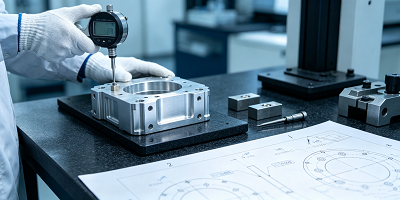
Precision inspection via CMM and optical equipment ensures product consistency and reduces rework, while inspection equipment and labor generate fixed indirect costs.
2.4 Management and Administrative Costs
Production scheduling, procurement, logistics and after-sales services form basic management costs, especially critical for small-batch, multi-variety customized production.
Case Study: Cost Analysis and Optimization for Precision Stainless Steel Structural Parts
This case focuses on customized 304 stainless steel precision components for automation equipment. The 300-piece order requires strict ±0.05 mm tolerance and Ra 0.8 μm surface roughness, featuring thin walls, deep holes and complex curved surfaces.
Initial Cost Analysis
The project faced typical cost and efficiency issues before optimization:
Low material utilization: Only 66% due to unreasonable nesting layouts and excessive scrap.
Low processing efficiency: Repeated clamping and frequent tool changes led to 42 minutes of single-piece machining time.
Severe tool wear: Stainless steel toughness accelerated cutter abrasion, increasing tool replacement frequency and costs.
High defective rate: Thin-wall structures were prone to deformation during processing, causing rework.
Practical Solutions and Implementation Measures
1. Material Layout and Fixture Optimization
Optimized staggered nesting and shared-edge cutting raised material utilization from 66% to 83%. Modular positioning fixtures eliminated repeated clamping, cutting auxiliary time and improving precision.
2. Processing Path and Tool Optimization
Optimized dynamic milling toolpaths reduced idle motion time from 14% to 7%. Composite tools decreased tool change frequency and shortened overall processing cycles.
3. Cutting Parameter Upgrade
Wear-resistant coated tools replaced standard cutters. Optimized cutting parameters boosted processing efficiency and tool service life under stable quality conditions.
4. Real-Time Monitoring and Quality Improvement
On-machine probe detection and real-time tool compensation effectively controlled thin-wall deformation. Optimized inspection rules reduced testing cycles and improved yield rate.
5. Scientific Production Scheduling
Balanced batch parallel production and standardized pre-production preparation maximized equipment utilization and shortened delivery cycles.
Optimization Outcomes
Conclusion
CNC machining cost control is a systematic optimization covering materials, tooling, technology, quality and production management. Effective cost reduction relies on comprehensive process upgrading, not simplified production standards.
Standardized manufacturing management reduces comprehensive production costs, stabilizes product quality and delivery efficiency. Process optimization experience strengthens core competitiveness in global precision machining markets.