The Complete Guide to Custom CNC Machining: Precision Manufacturing Solutions for Modern Industry
What is Custom CNC Machining?
Custom CNC (Computer Numerical Control) machining is a subtractive manufacturing process that uses pre-programmed computer software to control the movement of cutting tools and machinery. Unlike standard CNC production that creates identical, off-the-shelf parts, custom CNC machining specializes in producing unique, made-to-order components based on your specific CAD designs and technical requirements.
The process works by removing material from a solid block (called a blank or workpiece) using various cutting operations, including:
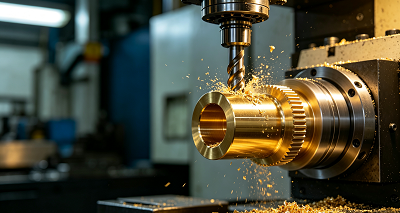
- Milling: Rotating cutting tools remove material from stationary workpieces
- Turning: Workpieces rotate while cutting tools shape the exterior
- Drilling: Creating precise holes and cavities
- 5-axis machining: Complex multi-angle operations for intricate geometries
Key Characteristics:
- Precision tolerances: Typically ±0.005mm to ±0.01mm for critical applications
- Material versatility: Works with over 50 engineering-grade materials
- Batch flexibility: Ideal for prototyping (1-10 units) to medium production (100-10,000 units)
- Complex geometry capability: Handles undercuts, curved surfaces, and intricate internal feature
7 Core Advantages of Custom CNC Machining
1. Unmatched Precision & Accuracy
Custom CNC machining delivers micron-level precision that manual operations simply cannot achieve. With computer-controlled movements eliminating human error, critical dimensions remain consistent across every part in your production run. This is essential for industries where even 0.01mm deviation can cause catastrophic failure.
2. Design Flexibility Without Compromise
Unlike injection molding or die casting that requires expensive tooling changes for design modifications, CNC machining allows rapid design iterations. Simply update your CAD file, and the next production run incorporates your changes—no additional tooling costs required.
3. Extensive Material Compatibility
From aerospace-grade titanium to medical PEEK plastics, custom CNC machining works with virtually any engineering material:
- Metals: Aluminum 6061/7075, Stainless Steel 304/316, Titanium Gr.2/5, Brass, Copper
- Plastics: PEEK, POM, Nylon, ABS, PC, Acrylic
- Specialty materials: Inconel, Hastelloy, Carbon Fiber composites
4. Rapid Turnaround for Prototyping
Traditional manufacturing methods can take weeks to prepare tooling. Custom CNC machining can produce functional prototypes in as little as 3-5 days, accelerating your product development cycle and getting your innovations to market faster.
5. Superior Material Properties
Unlike 3D printing that builds parts layer-by-layer (potentially creating weak points), CNC machining produces parts from solid material blocks. This results in superior structural integrity, uniform material properties, and better performance under stress or temperature extremes.
6. Cost-Effective for Low-to-Medium Volumes
For production quantities from 1 to 10,000 units, custom CNC machining often proves more cost-effective than processes requiring expensive tooling. There's no upfront mold investment, and setup costs are minimal.
7. Consistent Quality & Repeatability
Once programmed, CNC machines execute identical operations every time. This ensures your 1000th part matches the dimensional accuracy of your first part—critical for quality control and regulatory compliance in regulated industries.
Industry Applications: Where Custom CNC Machining Shines
?? Aerospace & Aviation
The aerospace industry demands components that perform under extreme conditions—high pressure, temperature fluctuations, and mechanical stress. Custom CNC machining produces:
- Turbine blades with ±5-micron tolerances
- Structural brackets and airframe components
- Fuel system parts and landing gear components
- Materials: Titanium, Inconel, Aluminum 7075
?? Medical & Healthcare
Medical manufacturing requires absolute precision, biocompatibility, and regulatory compliance. Applications include:
- Custom orthopedic implants (knee, hip, spinal)
- Surgical instruments and tooling
- Diagnostic equipment components
- Materials: Titanium Grade 5, PEEK, Medical-grade stainless steel
?? Automotive & Motorsports
From performance racing to electric vehicles, custom CNC machining enables innovation:
- Engine components and transmission parts
- Custom brackets and mounting systems
- Prototype parts for new vehicle development
- Lightweight aluminum and magnesium components
?? Automation & Robotics
Automation systems depend on precision components that operate reliably 24/7:
- Robotic arm joints and end effectors
- Conveyor system components
- Custom jigs, fixtures, and tooling
- Linear motion system parts
?? Electronics & Semiconductor
The electronics industry requires miniaturization and thermal management:
- Custom heat sinks and enclosures
- Connector housings and precision pins
- Test fixtures for PCB assembly
- EMI/RFI shielding components
The Complete Custom CNC Machining Process
Step 1: Project Inquiry & Technical Review
The process begins with your design files and requirements. A professional engineering team reviews:
- 3D CAD models (STEP/IGS format preferred)
- Technical drawings with GD&T specifications
- Material requirements and surface finish needs
- Quantity and delivery timeline
Pro Tip: Always provide complete technical documentation upfront to avoid costly revisions later.
Step 2: DFM Analysis & Quotation
Experienced engineers perform Design for Manufacturability (DFM) analysis to:
- Identify potential machining challenges
- Suggest cost-saving design optimizations
- Recommend appropriate materials and processes
- Provide transparent, itemized pricing
Step 3: CAD/CAM Programming
Your 3D model is converted into machine-readable instructions:
- CAM software generates toolpaths and G-code
- Machinists optimize cutting strategies for efficiency
- Virtual simulation detects collisions or interference
- Fixturing plans are developed for secure part holding
Step 4: Material Preparation & Setup
- Raw material is cut to approximate blank size
- Workpiece is securely fixtured on the machine
- Cutting tools are loaded and calibrated
- Machine parameters are set for the specific material
Step 5: Machining & In-Process Inspection
- First-article part is produced and thoroughly inspected
- Operators monitor critical dimensions during production
- Real-time adjustments maintain quality standards
- Multi-operation parts move between machines as needed
Step 6: Post-Processing & Finishing
- Deburring and edge breaking for safe handling
- Surface finishing: Anodizing, powder coating, plating
- Heat treatment or hardening as required
- Cleaning and passivation for corrosion resistance
Step 7: Final Quality Control & Packaging
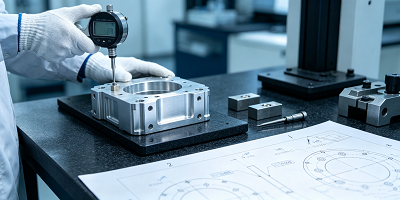
- CMM inspection verifies all critical dimensions
- Material certificates and inspection reports prepared
- Parts are carefully packaged to prevent shipping damage
- Custom labeling and serialization available
How to Choose the Right Custom CNC Machining Partner
Selecting the right manufacturing partner is critical to your project's success. Look for these key qualifications:
1. Quality Certifications
- ISO 9001:2015 for general quality management
- ISO 13485 for medical device manufacturing
- AS9100 for aerospace applications
- ITAR registration for defense-related projects
2. Technical Capabilities
- Range of machine sizes and capabilities (3-axis, 4-axis, 5-axis)
- In-house engineering support for DFM analysis
- Inspection equipment (CMM, optical comparators)
- Post-processing capabilities (anodizing, plating, heat treat)
3. Industry Experience
- Proven track record in your specific industry
- Portfolio demonstrating similar part complexity
- Understanding of industry-specific regulations
- References from satisfied customers
4. Communication & Transparency
- Responsive technical support during design phase
- Clear pricing with no hidden fees
- Regular production updates and status reports
- Proactive problem-solving when issues arise
Common Challenges & Solutions
Challenge 1: Part Warping After Machining
Solution:
- Use stress-relieved material
- Implement roughing/finishing operations with stress relief between
- Consider material grain direction in fixturing
Challenge 2: Surface Finish Imperfections
Solution:
- Optimize feed rates and spindle speeds
- Use high-quality, sharp cutting tools
- Implement climb milling for better finish
- Consider post-processing operations
Challenge 3: Tight Tolerance Achievement
Solution:
- Program with compensation for tool wear
- Perform in-process measurement
- Use temperature-stabilized machining environment
- Allow for material thermal expansion
Conclusion: Is Custom CNC Machining Right for Your Project?
Custom CNC machining represents the pinnacle of modern precision manufacturing, offering unmatched versatility, accuracy, and speed for projects ranging from single prototypes to medium-scale production runs.
Choose custom CNC machining when:
- You need high-precision parts with tight tolerances
- Design flexibility and rapid iterations are important
- Production quantities range from 1 to 10,000 units
- Material properties and structural integrity are critical
- You require consistent, repeatable quality