Why Custom Hardware Is Indispensable for Modern Industrial and Construction Projects
In today’s rapidly evolving manufacturing, construction, and outdoor engineering industries, standard hardware parts can no longer satisfy all application scenarios. Although mass-produced standard fasteners and accessories are cost-effective for general use, they often suffer from dimensional mismatches, limited material options, and insufficient durability for specialized environments. This is why custom non-standard hardware has gradually become a core solution for high-precision, high-durability, and scenario-specific project demands worldwide.
Custom hardware manufacturing refers to the one-stop tailored production of mechanical components according to customer drawings, samples, or actual on-site requirements. It covers structural design, dimensional optimization, material selection, surface treatment, and batch production. Unlike standard parts that follow fixed DIN, ISO, or GB specifications, customized hardware focuses on application adaptability, providing exclusive accessories for industrial equipment, steel structure engineering, outdoor municipal facilities, home customization, and cross-border supporting projects.
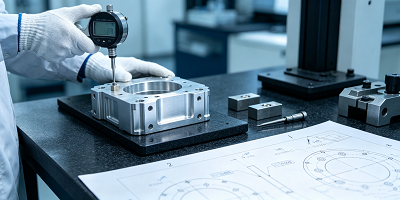
The biggest advantage of custom hardware is precise fitting. Many engineering failures and installation problems stem from incompatible standard parts, such as incorrect bevel angles, unmatched hole positions, unreasonable lengths, or unstable assembly structures. Custom hardware completely eliminates such issues. Every size, angle, and structure is strictly customized according to actual usage conditions, ensuring seamless installation, stable locking, and overall structural consistency. For cable railings, mechanical equipment, and special fixture systems, customized washers, screws, connectors, and rivets can greatly improve assembly efficiency and structural safety.
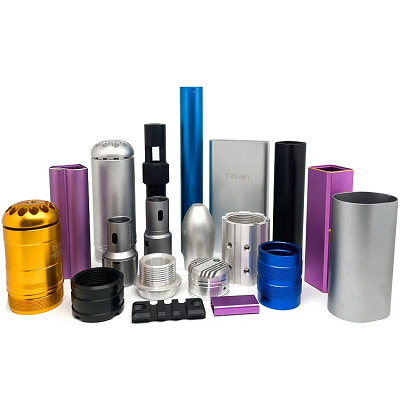
Material and surface finish customization further enhances product reliability in complex working conditions. Standard hardware usually adopts single carbon steel or ordinary stainless steel, which struggles to resist salt erosion in coastal areas, long-term outdoor weathering, and high-frequency mechanical friction. Custom services support diversified material selection, including 304 and 316 marine-grade stainless steel, high-strength carbon steel, and lightweight aluminum alloy. Multiple surface treatments such as galvanizing, black oxide, wire drawing, mirror polishing, and anodizing are available. These processes effectively improve rust resistance, corrosion resistance, wear resistance, and appearance texture, extending the service life of hardware components in harsh environments.
Flexible production capability is another key reason for the growing popularity of custom hardware. Traditional hardware factories tend to only accept large-batch orders, making it difficult for small-batch trials, new product research and development, and project renovation demands. Professional custom hardware manufacturers support sample customization, small-batch orders, and mass production. Whether clients need dozens of prototype parts or tens of thousands of bulk products, stable and consistent production quality can be guaranteed. This flexible model perfectly matches the iterative rhythm of modern industrial design and cross-border trade orders.
In the long run, custom hardware also brings obvious cost-saving benefits. Although the unit cost of customized parts is slightly higher than standard products, they effectively reduce hidden costs such as on-site rework, component replacement, and later maintenance. Optimized structural design can simplify installation procedures, reduce redundant accessories, and improve the overall coordination of finished products. For brand manufacturers and engineering companies, customized hardware also helps build product differentiation, getting rid of low-price homogenization competition and improving overall product grade and market competitiveness.
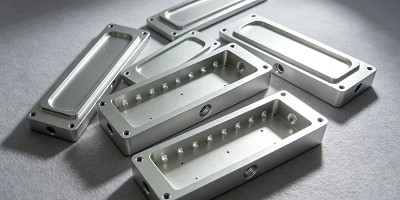
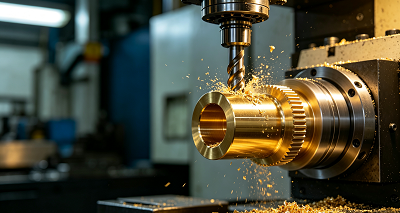
At present, common custom hardware products cover precision non-standard fasteners, bevel washers, Chicago screws, binding rivets, outdoor railing accessories, CNC turning parts, and stamping forming parts. Widely applied in industrial machinery, building decoration, outdoor landscape, automotive accessories, and smart home industries, these customized components have become essential supporting parts for high-quality projects.
To sum up, as industrial manufacturing becomes more refined and project requirements more diversified, custom hardware is no longer a niche demand but an inevitable trend in the hardware industry. It solves the pain points of poor compatibility, insufficient performance, and single style of standard parts, providing stable, durable, and highly matched hardware solutions for global customers.