Practical CNC Machining Quality & Efficiency Improvement Guidelines
1. Pre-Production Preparation — Avoid Defects From the Source
Adequate preparation is essential to prevent batch failures. Before processing, fully understand drawing tolerances, surface requirements and structural features, especially thin walls, sharp corners and deep cavities prone to deformation. Inspect machine lubrication, spindle condition and parameter compensation to avoid accuracy deviation. Standardize blank specifications, complete cutting, cleaning and scale removal, and apply heat treatment for special materials to ensure stable machining benchmarks.
2. Programming Optimization — Streamline Process & Boost Efficiency
Standardized programming greatly reduces risks and improves productivity. Conduct 3D toolpath simulation to avoid collision and interference. Remove redundant code, reduce idle lifting and empty travel, and optimize tool paths for uniform cutting force. Match customized speed, feed rate and cutting depth for stainless steel, carbon steel, aluminum and other materials to shorten processing cycles and avoid rough universal machining.
3. Fixturing & Tool Management — Stabilize Machining Accuracy
Most CNC accuracy errors come from improper clamping and chaotic tool management. Adopt one-time clamping for multi-surface machining to eliminate cumulative positioning errors and prevent workpiece vibration and displacement. Standardize tool management: calibrate compensation for new tools and replace worn tools timely. Select matching tool specifications and optimize tool change sequences to reduce downtime.
4. In-Process Control — Prevent Batch Non-Conformity
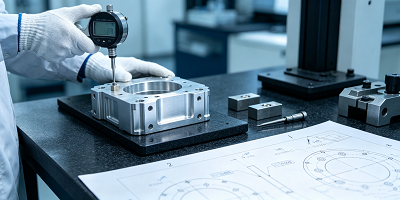
Implement first-piece full inspection and periodic batch sampling instead of final-only inspection. Mass production can only start after verifying dimensions, tolerances and surface quality. Adjust tool compensation timely according to tool wear and minor machine deviation. Ensure sufficient coolant supply to control temperature, reduce thermal deformation and prevent tool burnout, maintaining stable product quality.
5. On-Site Standard Management — Reduce Cost & Improve Output
Unify CNC standard operating procedures to minimize manual differences. Archive mature processing parameters, tool configurations and inspection data for repeated use to lower trial costs. Maintain daily machine cleaning, chip removal and regular maintenance to sustain long-term precision. Provide regular staff training to enhance fault judgment and fine-tuning capabilities for consistent production quality.
Conclusion
Excellent CNC factory manufacturing depends on four core principles: risk prevention in advance, process optimization, strict in-process control, and standardized workflow. Strict implementation effectively reduces rework and scrap rates, stabilizes machining precision, and achieves higher quality, higher efficiency and lower production costs.